Roofing
Arizona Roofing: 7 Ways Extreme Heat Damages Your Roof Year-Round
Arizona roofing faces some of the harshest weather conditions in the country. While many homeowners prepare for monsoon storms and heavy winds, the intense desert heat is often the biggest threat to a roof’s long-term performance. Months of extreme temperatures, relentless ultraviolet (UV) exposure, and constant thermal expansion place enormous stress on roofing materials throughout the year.
Whether you own a tile roof, shingle roof, foam roof, or flat roofing system, prolonged heat can slowly weaken your roof without obvious signs. By the time leaks, cracked tiles, or structural problems appear, the damage may already require extensive roof repair or even a complete roof replacement.
Understanding how Arizona roofing responds to extreme heat allows homeowners to recognize problems early, schedule timely roof inspections, and perform preventive roof maintenance before small issues become costly repairs.
In this guide, you’ll learn seven warning signs that indicate extreme heat is damaging your roof, along with practical tips to protect your investment and extend the life of your roofing system.
Why Arizona Roofing Faces Extreme Heat Every Year
Arizona is known for its long summers and record-breaking temperatures. During the hottest months, roof surfaces can exceed 150°F, placing continuous stress on roofing materials. Unlike occasional storms, heat affects your roof every single day, gradually reducing its lifespan if proper maintenance is ignored.
Arizona roofing must withstand:
- Intense ultraviolet (UV) radiation
- Daily temperature fluctuations
- Thermal expansion and contraction
- Dry desert air
- Dust accumulation
- Seasonal monsoon storms
- Strong wind exposure
These conditions can weaken roofing materials over time, making regular roof inspection Arizona services essential for identifying early signs of damage.
Homeowners who invest in routine roof maintenance Arizona can often prevent expensive roof repair Arizona projects while extending the life of their roofing system.
How Extreme Heat Affects Arizona Roofing Systems
Extreme heat does more than make your attic uncomfortable. It continuously expands roofing materials during the day and causes them to contract after sunset. This constant movement creates stress throughout the entire roofing system.
Over time, Arizona roofing may experience:
- Cracked roof tiles
- Worn underlayment
- Loose flashing
- Damaged sealants
- Fading roofing materials
- Reduced energy efficiency
- Hidden roof leaks
Without regular inspections, these problems often remain unnoticed until they begin affecting the interior of your home.
Working with an experienced Arizona roofing contractor allows homeowners to identify heat-related damage before it develops into major structural issues.
7 Warning Signs Your Arizona Roofing Has Heat Damage
Warning Sign #1: Cracked or Broken Roof Tiles
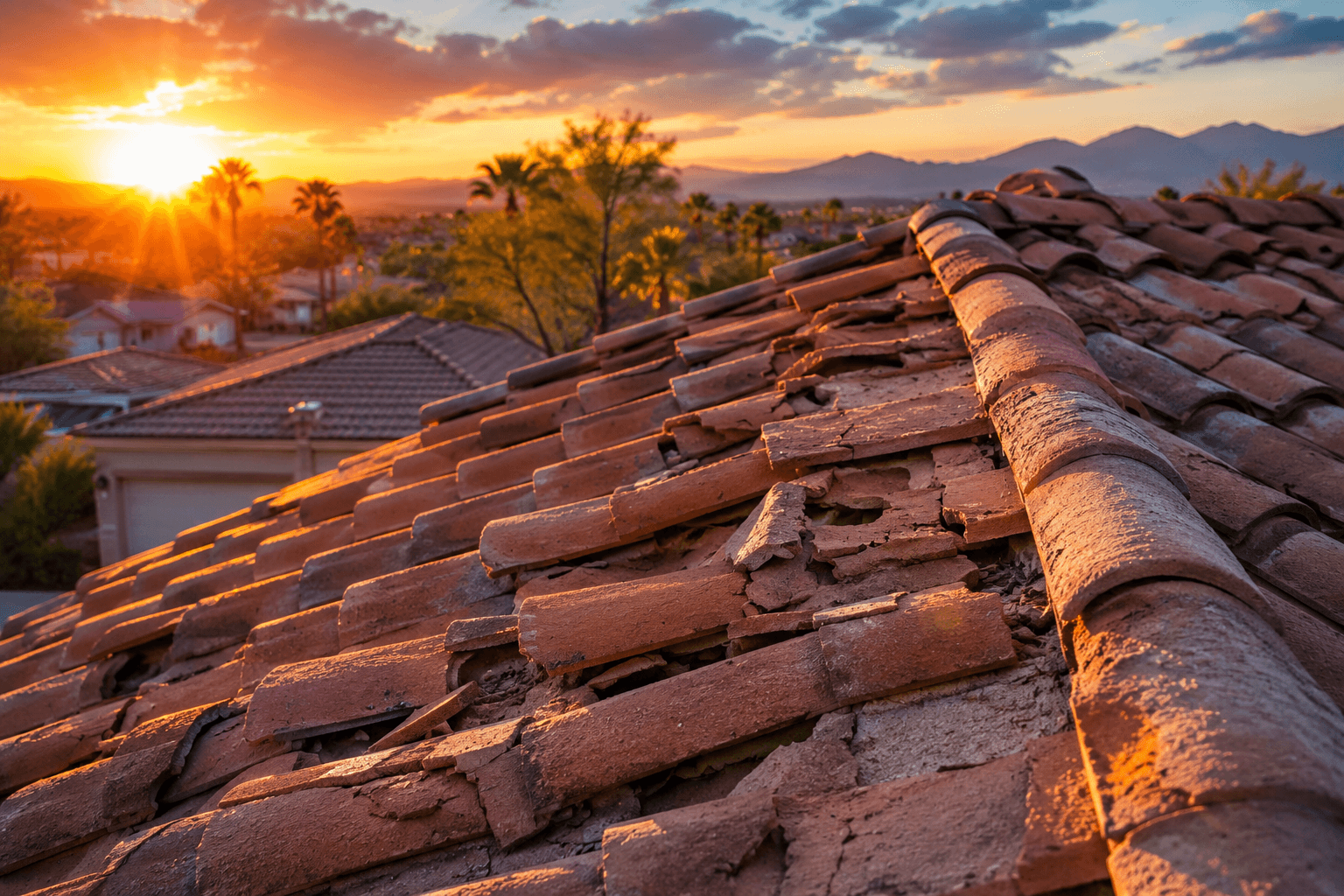
One of the earliest warning signs of heat damage is cracked roof tiles. Although Arizona roof tiles are designed to withstand harsh weather, years of constant heat eventually make them more brittle.
As roofing materials repeatedly expand and contract, small fractures begin to form. Even tiny cracks allow moisture to reach the underlayment during monsoon season, increasing the risk of roof leaks and water damage.
Watch for signs such as:
- Cracked concrete tiles
- Broken clay tiles
- Loose roof tiles
- Missing roof tiles
- Uneven roof surfaces
A professional roof inspection Arizona can identify damaged tiles before water intrusion occurs.
Many Arizona homes use concrete roof tiles because they perform well in hot climates. Products like the Eagle Bel Air concrete roof tile are designed for durability and long-lasting performance in extreme weather.
Prompt roof repair Arizona services help prevent more extensive repairs while protecting the structural integrity of your roofing system.
Warning Sign #2: Faded Roofing Materials and UV Damage
Extreme sunlight doesn’t only affect paint and outdoor furniture—it also causes gradual deterioration of roofing materials. Constant UV exposure breaks down protective coatings, dries out sealants, and accelerates aging.
Over time, Arizona roofing may begin to show:
- Faded roof color
- Brittle roofing materials
- Dry or cracked sealants
- Weathered flashing
- Surface deterioration
Although fading may seem cosmetic, it often signals deeper heat-related damage beneath the surface.
High-quality shingles designed to withstand prolonged sun exposure can help reduce premature roof deterioration. Products like the GAF Timberline® HDZ™ shingles are engineered for durability and long-lasting weather protection.
Routine roof maintenance Arizona allows roofing professionals to inspect vulnerable areas and recommend repairs before more serious issues develop.
Warning Sign #3: Higher Energy Bills Without Explanation
If your cooling costs continue rising even after servicing your HVAC system, your roof could be contributing to the problem.
As Arizona roofing materials deteriorate from prolonged heat exposure, they lose their ability to reflect sunlight and insulate your home efficiently. Damaged roofing systems allow more heat to transfer into the attic, forcing air conditioning systems to work harder throughout the day.
Common roofing issues that reduce energy efficiency include:
- Damaged underlayment
- Poor attic ventilation
- Worn roofing materials
- Cracked flashing
- Heat-damaged insulation
- Air leaks around roof penetrations
Scheduling a professional roof inspection Arizona helps determine whether roofing problems are contributing to increased energy consumption.
Warning Sign #4: Roof Leaks After Monsoon Storms
Many homeowners believe monsoon storms are the cause of roof leaks, but in reality, extreme heat often weakens a roofing system long before the first storm arrives. Arizona roofing is exposed to months of intense sun, causing roofing materials to crack, shrink, and deteriorate. When heavy rain finally arrives, water easily finds its way through these damaged areas.
Heat-related roof damage combined with monsoon weather commonly leads to:
- Water stains on ceilings
- Damp attic insulation
- Mold or mildew growth
- Leaking roof vents
- Damaged flashing
- Interior water damage
Scheduling a roof inspection Arizona after monsoon season helps identify hidden moisture problems before they become major structural repairs.
If you notice even a small leak, contact an experienced Arizona roofing contractor immediately. Delaying roof repair Arizona services often results in higher repair costs and unnecessary damage to your home.
Warning Sign #5: Poor Roof Ventilation Traps Heat
Roof ventilation plays an important role in protecting Arizona roofing from excessive heat buildup. Without proper airflow, attic temperatures can become dangerously high, placing additional stress on roofing materials and reducing your home’s energy efficiency.
Poor ventilation can cause:
- Excessive attic heat
- Premature aging of roofing materials
- Higher cooling costs
- Moisture buildup
- Warped roof decking
- Shortened roof lifespan
A professional roof inspection Arizona evaluates both the condition of your roof and the effectiveness of your attic ventilation.
Improving ventilation is one of the most effective roof maintenance Arizona strategies for extending the life of your roofing system.
Warning Sign #6: Sagging or Uneven Roof Areas
A healthy roof should have a straight, even appearance. If sections of your roof begin to sag or appear uneven, it may indicate that prolonged heat exposure has weakened the roofing structure or allowed moisture to penetrate beneath the surface.
Potential causes include:
- Heat-damaged roof decking
- Water intrusion
- Structural deterioration
- Worn underlayment
- Long-term roof neglect
These issues should never be ignored. An experienced Arizona roofing contractor can determine whether the affected area requires roof repair Arizona or a complete roof replacement Arizona.
Early detection often prevents more extensive structural damage and significantly reduces repair costs.
Warning Sign #7: Your Roof Is Nearing the End of Its Lifespan
Even the highest-quality roofing materials eventually wear out under Arizona’s harsh climate. Constant UV exposure, extreme heat, seasonal storms, and years of thermal expansion gradually reduce a roof’s ability to protect your home.
Common signs your roof may be reaching the end of its lifespan include:
- Frequent roof repairs
- Multiple cracked or missing tiles
- Widespread surface deterioration
- Persistent roof leaks
- Increased energy bills
- Aging underlayment
- Recurring storm damage
If your roof continues to develop new problems each year, a roof replacement Arizona may be a better long-term investment than repeated repairs.
A trusted Arizona roofing contractor can evaluate your roof and recommend the most cost-effective solution based on its condition.
Roof Maintenance Tips for Arizona Homeowners
Preventive maintenance is the best way to protect Arizona roofing from long-term heat damage. Routine inspections and small repairs help homeowners avoid unexpected roofing emergencies while extending the life of their roofing system.
Follow these roof maintenance Arizona tips:
- Schedule a professional roof inspection at least once a year.
- Inspect your roof after every major monsoon storm.
- Replace cracked or broken roof tiles promptly.
- Keep gutters and roof valleys free of debris.
- Trim tree branches that touch the roof.
- Check flashing around vents, skylights, and chimneys.
- Monitor your attic for signs of moisture or heat buildup.
- Address minor roof damage before it becomes a major repair.
Selecting quality roofing materials is one of the best ways to improve long-term roof performance. The Owens Corning Duration® Series shingles are designed to deliver enhanced durability and protection.
Consistent roof maintenance Arizona reduces repair costs and helps your roof withstand Arizona’s demanding climate year after year.
Roof Repair or Roof Replacement?
One of the most common questions homeowners ask is whether they should repair their roof or invest in a complete replacement.
Roof repair Arizona may be the best option if:
- Damage is limited to one area.
- The roof is relatively new.
- Leaks are minor.
- Most roofing materials remain in good condition.
A roof replacement Arizona may be recommended when:
- The roof has widespread damage.
- Repairs are becoming frequent.
- The underlayment has deteriorated.
- Structural damage is present.
- The roof has reached the end of its expected lifespan.
A professional roof inspection Arizona provides the information needed to make the right decision for your home and budget.
Why Professional Arizona Roofing Services Matter
Arizona roofing requires specialized knowledge that goes beyond standard roofing practices. Local contractors understand how extreme heat, UV exposure, and monsoon weather affect different roofing systems throughout the year.
Choosing an experienced Arizona roofing contractor provides homeowners with:
- Accurate roof inspections
- High-quality roof repairs
- Professional roof replacement services
- Preventive roof maintenance
- Expert recommendations for Arizona’s climate
- Long-lasting roofing solutions
Working with a local roofing expert ensures your roof receives the care it needs to perform reliably in one of the country’s harshest climates.
Frequently Asked Questions About Arizona Roofing
How does extreme heat affect Arizona roofing?
Extreme heat causes roofing materials to expand and contract daily. Over time, this weakens tiles, flashing, underlayment, and sealants, increasing the risk of roof leaks and premature roof failure.
How often should I schedule a roof inspection in Arizona?
Most roofing professionals recommend scheduling a roof inspection Arizona at least once a year and after severe monsoon storms to identify heat damage and other roofing issues early.
Can extreme heat shorten the life of my roof?
Yes. Constant UV exposure and high temperatures accelerate wear on roofing materials, making routine roof maintenance Arizona essential for extending your roof’s lifespan.
What are the first signs of roof heat damage?
Early warning signs include cracked roof tiles, faded roofing materials, higher energy bills, poor attic ventilation, roof leaks, and sagging roof sections.
When should I replace my roof instead of repairing it?
If your roof has widespread damage, repeated leaks, or has reached the end of its expected lifespan, a roof replacement Arizona may be more cost-effective than continued repairs.
Conclusion
Arizona roofing is exposed to some of the most extreme weather conditions in the country. While the damage caused by intense heat often develops gradually, ignoring the warning signs can lead to expensive repairs, reduced energy efficiency, and a shorter roof lifespan. By recognizing early signs of heat damage and investing in routine roof inspection Arizona services, homeowners can protect their property before small issues become major problems.
Regular roof maintenance Arizona, timely roof repair Arizona, and professional evaluations all play an important role in keeping your roofing system in excellent condition. Whether your roof has suffered years of UV exposure, needs repairs after monsoon season, or is approaching the end of its service life, working with an experienced Arizona roofing contractor ensures you receive reliable recommendations and quality workmanship.
At Tier One Roofing, we understand the unique challenges Arizona homeowners face. From comprehensive roof inspections to expert roof repairs and complete roof replacement Arizona services, our team is committed to helping you protect your investment with durable roofing solutions built for Arizona’s demanding climate. Contact us today to schedule your professional roof inspection and keep your roof performing at its best all year long.