Roofing
Best Roofing Materials for Hot Climates: A Homeowner’s Guide to Durability and Energy Efficiency
Choosing the best roofing materials for hot climates is one of the most important decisions homeowners can make. In regions like Arizona, Nevada, Texas, and other areas with intense sun exposure and extreme temperatures, roofing systems must withstand relentless UV radiation, thermal expansion, and prolonged heat while maintaining energy efficiency and long-term durability.
The wrong roofing material can increase cooling costs, shorten roof lifespan, and lead to frequent repairs. On the other hand, selecting the right roofing system can improve indoor comfort, reduce energy consumption, and provide decades of reliable protection.
This guide explores the best roofing materials for hot climates, their benefits, costs, lifespan, and factors homeowners should consider before making a decision.
Key Takeaways
- Metal roofing offers excellent heat reflection and long-term durability.
- Clay and concrete tile roofs perform exceptionally well in desert climates.
- Cool roof systems can reduce rooftop temperatures and cooling costs.
- Slate roofing provides unmatched longevity but comes at a higher cost.
- Energy-efficient roofing materials help protect homes from UV damage and extreme temperatures.
How to Choose the Best Roofing Materials for Hot Climates
When comparing roofing materials, homeowners should evaluate:
- Energy efficiency
- Expected lifespan
- Heat resistance
- Maintenance requirements
- Installation costs
- Long-term value
The best roofing materials for hot climates balance durability, performance, and energy savings while providing reliable protection against UV exposure and extreme temperatures.
Why the Best Roofing Materials for Hot Climates Matter
Roofs are constantly exposed to the elements, but homes in hot climates face additional challenges.
Extreme heat can cause:
- Premature material deterioration
- Cracking and warping
- Increased attic temperatures
- Higher cooling costs
- Thermal expansion and contraction
- Reduced roof lifespan
The best roofing materials for hot climates are designed to reflect sunlight, resist UV damage, and maintain structural integrity despite temperature fluctuations.
According to the U.S. Department of Energy, energy-efficient roofing systems can help reduce cooling demands in hot climates.
Factors to Consider When Choosing Roofing Materials
Before selecting a roofing system, homeowners should evaluate several factors.
Heat Reflectivity
Reflective roofing materials help reduce heat absorption and lower indoor temperatures.
Durability
Hot climates accelerate wear and tear. Roofing materials should withstand UV exposure, thermal stress, and severe weather conditions.
Energy Efficiency
Energy-efficient roofing systems reduce cooling demands and improve overall home performance.
Maintenance Requirements
Some roofing materials require more frequent inspections and repairs than others.
Cost and Lifespan
Balancing upfront costs with long-term performance helps maximize return on investment.
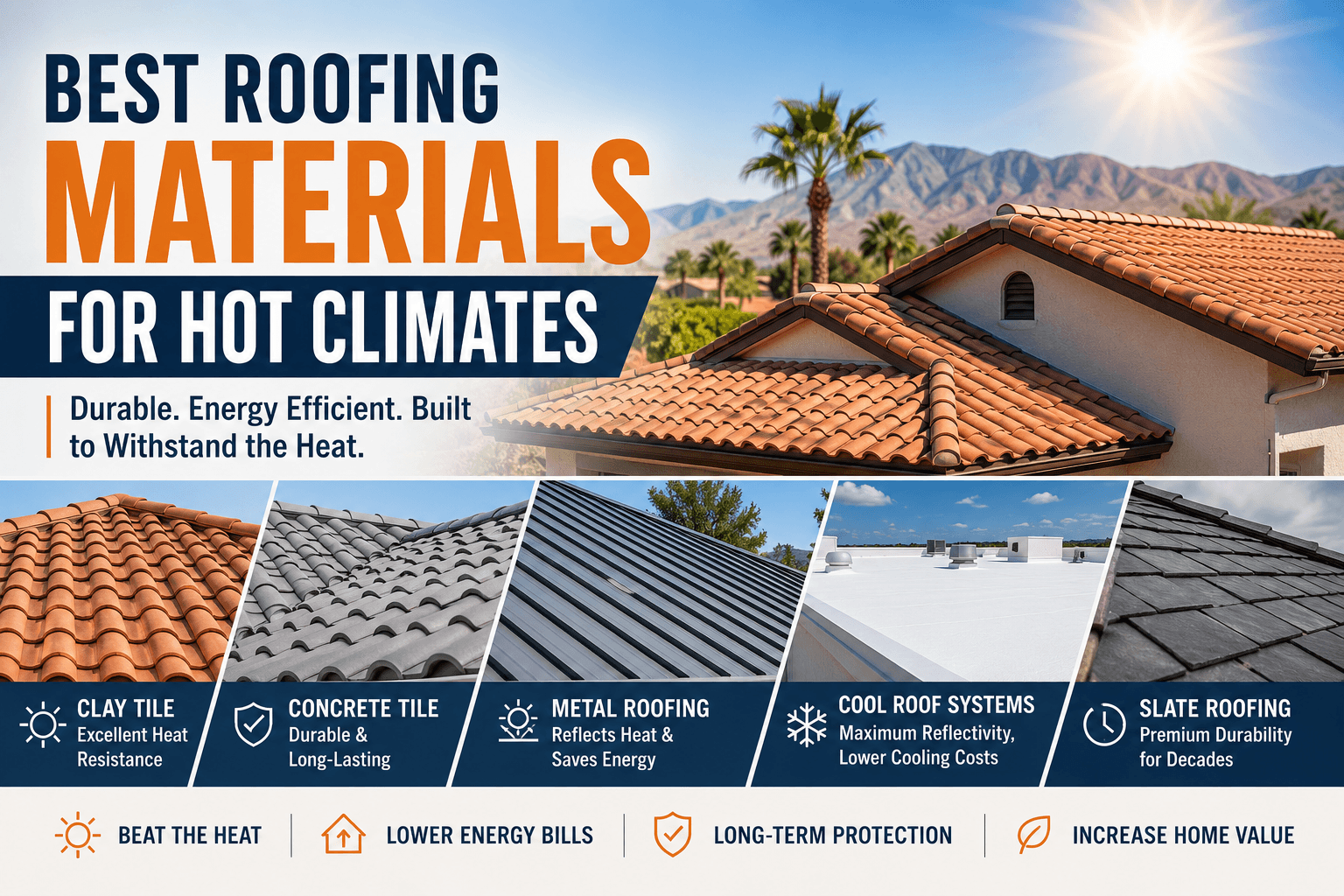
Best Roofing Materials for Hot Climates
1. Clay Tile Roofing
Clay tile roofing has been used for centuries in hot climates because of its exceptional heat resistance and durability.
Benefits include:
- Excellent thermal performance
- Natural ventilation properties
- UV resistance
- Long lifespan
- Minimal maintenance
Average Lifespan: 50–100 Years
Best For: Southwestern and Mediterranean-style homes
2. Concrete Tile Roofing
Concrete tiles offer many of the same benefits as clay tiles at a lower price point.
Advantages include:
- High durability
- Fire resistance
- Excellent heat performance
- Wind resistance
- Long service life
Average Lifespan: 40–75 Years
Best For: Residential homes in desert climates
3. Metal Roofing
Metal roofing is one of the most energy-efficient roofing options available today.
Benefits include:
- Reflects solar heat
- Lightweight construction
- Long lifespan
- Low maintenance
- Excellent durability
Reflective metal roofing can significantly reduce cooling costs during hot summer months.
The Metal Roofing Alliance provides additional information about the energy-saving benefits and durability of modern metal roofing systems.
Average Lifespan: 40–70 Years
Best For: Modern homes and energy-conscious homeowners
4. Cool Roof Systems
Cool roofs are specifically designed to reflect more sunlight and absorb less heat than traditional roofing materials.
Features include:
- Reflective coatings
- Specialized membranes
- Improved energy efficiency
- Lower roof surface temperatures
Cool roof technology can reduce rooftop temperatures by dozens of degrees compared to conventional materials.
Average Lifespan: Varies by system
Best For: Homes focused on energy savings
5. Slate Roofing
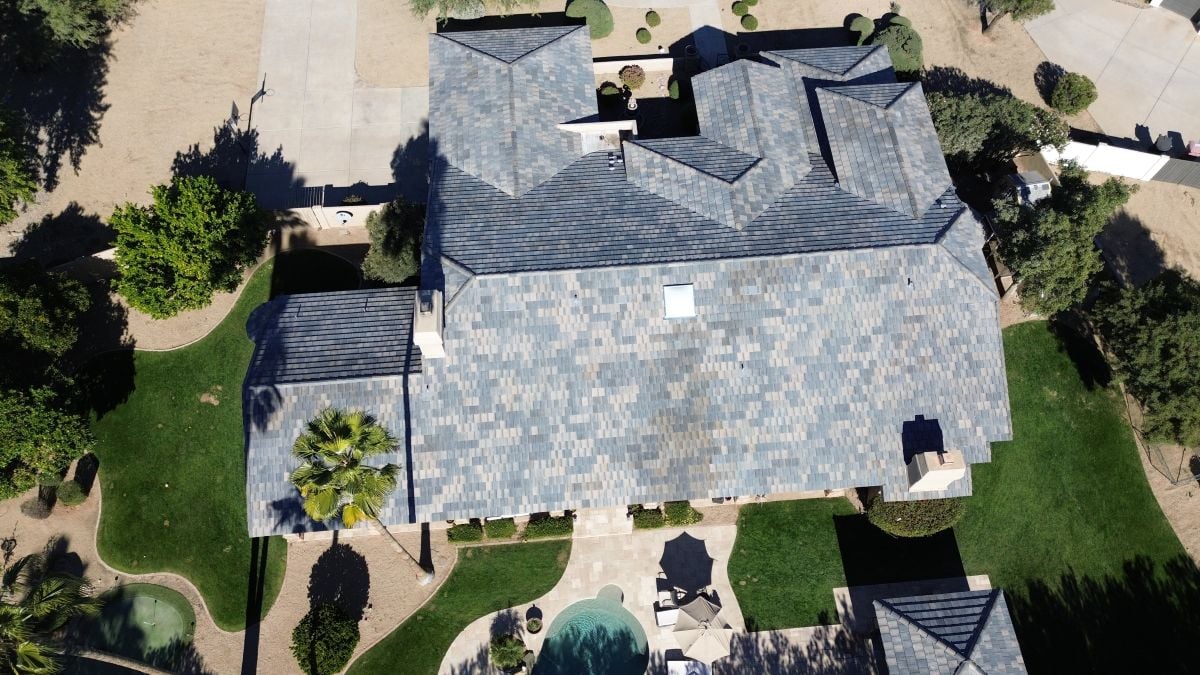
Slate is a premium roofing material known for exceptional longevity and heat resistance.
Advantages include:
- Natural stone durability
- UV resistance
- Fire resistance
- Minimal maintenance
Average Lifespan: 75–150 Years
Best For: Luxury homes
6. Asphalt Shingles with Reflective Technology
While standard asphalt shingles may absorb heat, newer reflective shingles offer improved energy efficiency.
Benefits include:
- Affordable installation
- Wide design options
- Improved solar reflectance
- Easier repairs
Average Lifespan: 15–30 Years
Best For: Budget-conscious homeowners
Roofing Material Comparison Chart
| Roofing Material | Lifespan | Heat Resistance | Energy Efficiency | Maintenance |
|---|---|---|---|---|
| Clay Tile | 50–100 Years | Excellent | High | Low |
| Concrete Tile | 40–75 Years | Excellent | High | Low |
| Metal Roofing | 40–70 Years | Excellent | High | Low |
| Cool Roof Systems | 20–40 Years | Excellent | Very High | Low |
| Slate Roofing | 75–150 Years | Excellent | High | Low |
| Reflective Asphalt Shingles | 15–30 Years | Moderate | Medium | Medium |
Energy-Efficient Features of the Best Roofing Materials for Hot Climates
When evaluating roofing systems, homeowners should look for features that improve energy performance.
Reflective Surfaces
Reflective roofing materials reduce heat absorption by reflecting sunlight away from the home.
Proper Ventilation
Attic ventilation helps remove trapped heat and improves roofing performance.
Insulation Compatibility
Roofing systems should work effectively with attic insulation to maximize energy savings.
Cool Roof Coatings
Reflective coatings can improve the performance of existing roofing systems.
Common Roofing Problems in Hot Weather
High temperatures can accelerate roofing wear.
Common issues include:
UV Damage
Prolonged sun exposure gradually weakens roofing materials.
Thermal Expansion
Repeated expansion and contraction can stress roofing components.
Cracking and Brittleness
Extreme heat can cause some materials to crack over time.
Sealant Failure
Roof sealants and flashing components may deteriorate faster in hot climates.
Higher Cooling Costs
Poor roofing performance can increase energy consumption and utility bills.
Homeowners can review severe weather preparedness recommendations from FEMA to help protect their roofing systems during extreme weather events.
How to Extend the Lifespan of the Best Roofing Materials for Hot Climates
Proper maintenance helps maximize roof performance.
Schedule Regular Inspections
Professional inspections help identify minor issues before they become major repairs.
Keep Roof Surfaces Clean
Removing debris improves drainage and prevents premature wear.
Address Repairs Promptly
Small roofing problems are easier and less expensive to repair.
Improve Attic Ventilation
Ventilation helps reduce heat buildup and protects roofing materials.
Consider Reflective Roof Coatings
Roof coatings can improve energy efficiency and reduce UV-related deterioration.
The National Roofing Contractors Association recommends routine roof inspections and maintenance to maximize roof lifespan.
Addressing minor issues with professional roof repair services can help prevent premature roof failure and extend the lifespan of your roofing system.
FAQs About Roofing Materials for Hot Climates
What is the best roofing material for extreme heat?
Clay tile, concrete tile, metal roofing, and cool roof systems are among the best options for extreme heat conditions.
Does metal roofing make a home hotter?
No. Reflective metal roofing often reduces heat absorption and improves energy efficiency.
Are tile roofs good for Arizona?
Yes. Clay and concrete tile roofs perform exceptionally well in Arizona’s hot and sunny climate.
What is a cool roof?
A cool roof is designed to reflect more sunlight and absorb less heat than traditional roofing systems.
Which roofing material lasts the longest?
Slate roofing generally offers the longest lifespan, often exceeding 100 years with proper maintenance.
Can roofing materials reduce cooling costs?
Yes. Reflective and energy-efficient roofing systems can lower cooling expenses by reducing heat transfer.
Are asphalt shingles suitable for hot climates?
Reflective asphalt shingles can perform well, but tile, metal, and cool roof systems typically provide better heat resistance.
How often should roofs be inspected in hot climates?
Most roofing professionals recommend annual inspections and additional inspections after severe weather events.
What roofing material reflects the most heat?
Metal roofing with reflective coatings and certified cool roofing systems typically reflect the most solar heat and can significantly reduce roof surface temperatures.
Are cool roofs worth it in hot climates?
Yes. Cool roofs are specifically designed to reflect sunlight and reduce heat absorption, helping homeowners lower cooling costs and improve indoor comfort.
Which roofing material requires the least maintenance?
Metal roofing, clay tile roofing, and slate roofing generally require less maintenance than traditional asphalt shingles.
Can roofing materials affect home resale value?
Yes. Durable, energy-efficient roofing systems often improve curb appeal, reduce future maintenance concerns, and increase property value.
What roofing material performs best during extreme summer temperatures?
Clay tile, concrete tile, metal roofing, and cool roof systems are among the best-performing roofing materials during prolonged periods of extreme heat.
Why Professional Roofing Guidance Matters
Choosing the best roofing material for a hot climate involves more than comparing costs. Factors such as roof slope, attic ventilation, insulation levels, local weather conditions, and long-term maintenance requirements all influence roofing performance.
A professional roofing inspection can help homeowners identify the most energy-efficient and cost-effective roofing solution based on their specific property and climate conditions.
By choosing the best roofing materials for hot climates, homeowners can improve energy efficiency, reduce cooling costs, extend roof lifespan, and protect their property from extreme weather conditions for decades.
Conclusion
Selecting the best roofing materials for hot climates is essential for maximizing energy efficiency, reducing maintenance costs, and extending roof lifespan. Homeowners living in regions with intense heat and UV exposure should prioritize materials that offer superior reflectivity, durability, and long-term performance.
Whether you choose clay tile, concrete tile, metal roofing, slate, or a cool roof system, investing in the right roofing material can improve indoor comfort, lower cooling costs, and protect your home for decades. Consulting with a qualified roofing professional can help you determine which roofing system best meets your needs, budget, and climate conditions.