Roofing
Emergency Roof Repair in Phoenix: What to Do When Your Roof Is Damaged
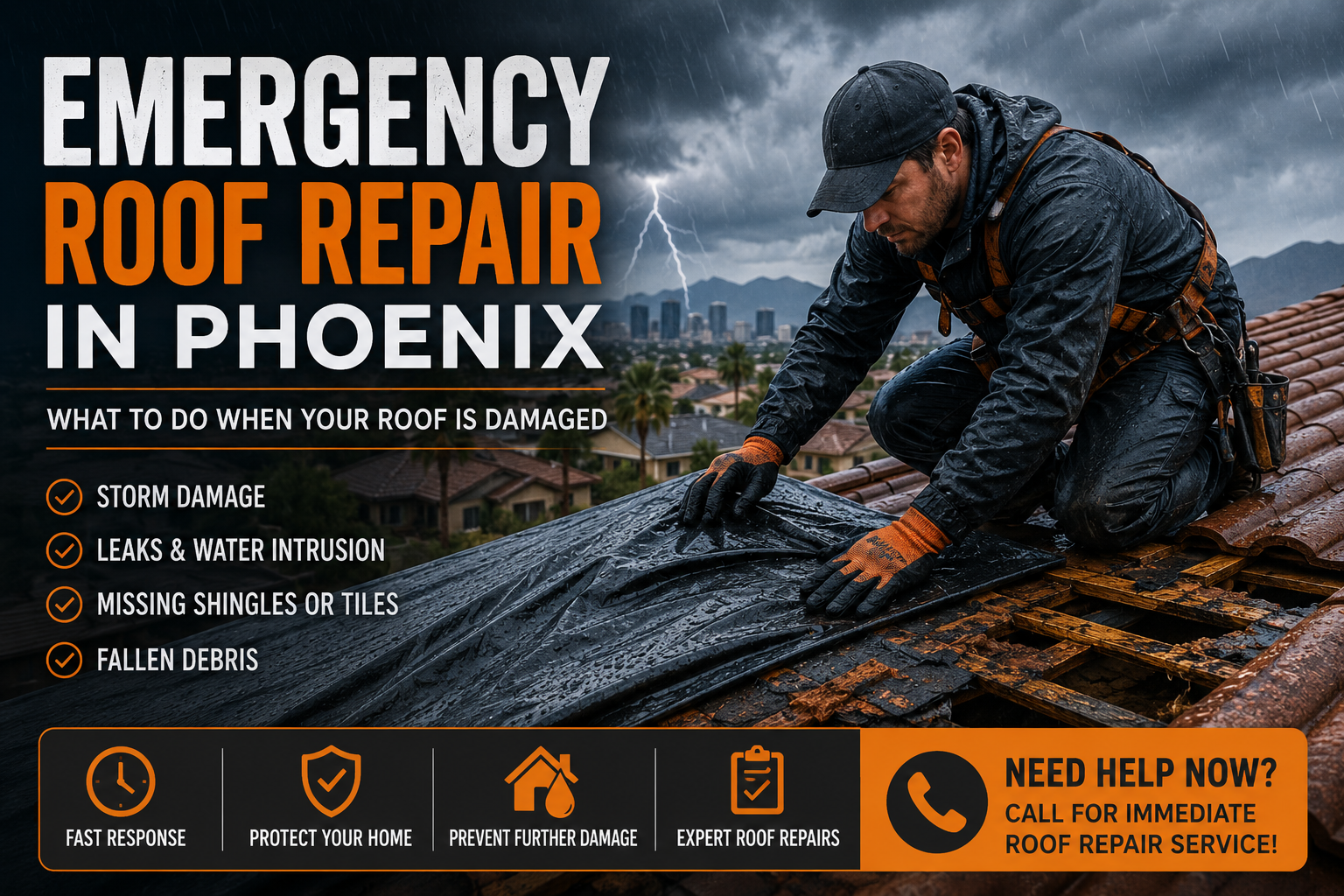
Emergency roof repair in Phoenix is often needed after monsoon storms, sudden roof leaks, fallen debris, or unexpected roofing failures. Acting quickly can help minimize water damage, protect your home’s structure, and prevent costly repairs.
This guide explains what homeowners should do after roof damage, common causes of roofing emergencies, repair costs, and how professional emergency roof repair services can help.
Emergency roof repair in Phoenix is often necessary after severe weather events, but damage can also occur because of aging materials, cracked flashing, broken roof tiles, or long-term wear caused by Arizona’s intense heat and UV exposure.
This guide explains what homeowners should do after roof damage, common emergency roofing situations, warning signs that require immediate attention, and how professional emergency roof repair services can help protect your home.
Benefits of Professional Emergency Roof Repair in Phoenix
When severe roof damage occurs, professional emergency roofing services can help protect your home from additional problems. Attempting temporary repairs without proper equipment or experience may increase the risk of injury and further roof damage.
A professional contractor providing emergency roof repair in Phoenix can quickly identify the source of leaks, assess structural concerns, and implement temporary or permanent repairs. Experienced roofers also understand how Arizona’s heat, monsoon storms, and UV exposure affect roofing systems.
Homeowners replacing damaged roofing materials may also consider energy-efficient options recommended by ENERGY STAR to help reduce cooling costs in Arizona.
Benefits of professional emergency roofing services include:
- Fast response times
- Accurate damage assessment
- Safe repair procedures
- Proper leak detection
- Insurance claim documentation
- Long-term repair solutions
Prompt action helps reduce water intrusion and prevent more extensive structural damage.
Emergency Roof Repair in Phoenix for Different Roofing Types
Different roofing materials require different repair approaches during emergencies. A contractor experienced in emergency roof repair in Phoenix should understand how Arizona weather affects each roofing system.
Tile Roof Emergency Repairs
Tile roofs are common throughout Phoenix because of their durability and heat resistance. However, broken or displaced tiles after storms can expose underlayment and create leak risks.
Asphalt Shingle Emergency Repairs
High winds can lift or remove shingles, allowing water intrusion and UV damage.
Flat Roof Emergency Repairs
Flat roofs often experience drainage issues and ponding water after storms, making fast repairs essential.
Metal Roof Emergency Repairs
Although durable, metal roofing systems can still experience flashing failures, punctures, or storm-related damage.
Although durable, metal roofing systems can still experience flashing failures, punctures, or storm-related damage.
What Happens During an Emergency Roof Inspection?
Many homeowners are unsure what to expect after contacting a contractor for emergency roofing services.
A professional inspection typically includes:
- Leak source identification
- Storm damage assessment
- Flashing inspection
- Tile or shingle evaluation
- Structural review
- Attic inspection
- Documentation for insurance claims
This evaluation helps determine whether temporary repairs or permanent repairs are required.
Emergency Roof Repair in Phoenix After Monsoon Season
Arizona monsoon storms are one of the leading causes of emergency roofing service calls.
After a storm, homeowners should inspect for:
- Missing roof tiles
- Damaged flashing
- Water stains
- Fallen debris
- Gutter damage
- Roof leaks
Scheduling a professional inspection after severe weather can help identify hidden damage before it worsens.
What Qualifies as a Roofing Emergency?
Not every roofing issue requires immediate service, but certain situations should be addressed as quickly as possible.
A roofing emergency typically includes:
- Active roof leaks
- Missing roofing materials after a storm
- Fallen tree or debris damage
- Roof punctures
- Significant flashing damage
- Structural roof sagging
- Storm-related roof failures
- Water entering the home
- Wind-lifted shingles or tiles
When these problems occur, delaying repairs can allow water intrusion to spread into insulation, drywall, electrical systems, and structural components.
Emergency Roof Repair in Phoenix After Monsoon Storms
Phoenix monsoon storms can produce damaging winds, blowing debris, heavy rain, and dust storms. Homeowners can monitor storm activity and weather alerts through the National Weather Service Phoenix.
Common monsoon-related roofing issues include:
- Missing roof tiles
- Wind-lifted shingles
- Flashing damage
- Roof punctures
- Water intrusion
- Gutter damage
Scheduling a professional roof inspection after severe weather can help identify hidden damage before leaks develop.
Common Causes of Emergency Roof Damage in Phoenix
Phoenix homeowners face unique roofing challenges because of Arizona’s climate.
Monsoon Storm Damage
Monsoon season often brings:
- High winds
- Flying debris
- Heavy rainfall
- Dust storms
These conditions can damage shingles, dislodge roof tiles, and expose vulnerable areas of the roofing system.
Extreme Heat and UV Exposure
Phoenix experiences prolonged periods of intense sunlight that gradually weaken roofing materials.
Common heat-related issues include:
- Cracked roofing materials
- Deteriorated sealants
- Brittle shingles
- Damaged flashing
Fallen Tree Limbs and Debris
Strong winds can cause tree branches to strike roofing systems, resulting in:
- Broken tiles
- Roof punctures
- Structural damage
- Gutter damage
Aging Roofing Systems
Older roofs naturally become more vulnerable to:
- Leaks
- Material deterioration
- Flashing failures
- Underlayment wear
Regular inspections can help identify these problems before they become emergencies.
What to Do Immediately After Roof Damage
Taking the right steps after roof damage can help minimize repair costs and prevent additional problems.
1. Prioritize Safety
If you suspect structural damage, avoid entering affected areas.
Stay away from:
- Sagging ceilings
- Exposed electrical wiring
- Water-damaged fixtures
- Areas beneath visible roof damage
Safety should always come first.
Homeowners should avoid climbing onto damaged roofs. Professional contractors follow OSHA roofing safety guidelines when performing emergency inspections and repairs.
2. Document the Damage
Take clear photos of:
- Exterior roof damage
- Interior water intrusion
- Damaged ceilings
- Fallen debris
- Affected personal property
Proper documentation can support insurance claims after roof damage. The Insurance Information Institute provides guidance on documenting property damage and understanding insurance coverage.
3. Contact an Emergency Roof Repair Contractor
A professional roofing contractor can assess the damage and recommend immediate solutions.
Prompt action often prevents:
- Mold growth
- Structural deterioration
- Additional water damage
- Increased repair costs
4. Protect Belongings
Move valuable items away from affected areas whenever possible.
Use:
- Plastic sheeting
- Containers
- Towels
- Temporary coverings
to minimize water-related damage.
Signs You Need Emergency Roof Repair
Some warning signs indicate immediate roofing attention is needed.
Active Water Leaks
Water entering the home is one of the most obvious signs of a roofing emergency.
Missing Roof Tiles or Shingles
Strong winds can expose underlayment and roof decking, increasing the risk of leaks.
Sagging Roof Sections
Sagging may indicate structural damage that requires immediate professional evaluation.
Interior Water Stains
New stains on ceilings or walls often signal roof leaks.
Storm Damage
After severe weather, homeowners should inspect for:
- Loose materials
- Debris impacts
- Flashing damage
- Visible roof movement
Temporary Measures to Minimize Damage
While waiting for professional emergency roof repair in Phoenix, temporary protection measures may help reduce additional damage.
Tarp Installation
Emergency tarping can temporarily cover exposed roofing areas.
Water Containment
Place buckets beneath active leaks to protect flooring and furnishings.
Debris Removal
Remove loose debris from safe, accessible areas when possible.
Attic Monitoring
Check attic spaces for signs of:
- Water intrusion
- Wet insulation
- Active leaks
- Structural concerns
Avoid climbing onto a damaged roof without proper safety equipment.
Emergency Roof Repair vs Roof Replacement
Not every emergency requires complete roof replacement.
Emergency Roof Repair May Be Appropriate When:
- Damage is localized
- Roofing materials remain in good condition
- Leaks are isolated
- Structural components are unaffected
Roof Replacement May Be Necessary When:
- Damage is widespread
- The roof is nearing the end of its lifespan
- Multiple leaks exist
- Structural issues are present
- Previous repairs have repeatedly failed
A professional roof inspection can determine the most cost-effective solution.
How Emergency Roof Repairs Are Performed
The repair process varies depending on the type and severity of damage.
Common emergency roof repair services include:
Leak Repairs
Roofers identify the source of water intrusion and repair damaged areas.
Flashing Repairs
Damaged flashing around chimneys, vents, skylights, and roof penetrations is repaired or replaced.
Tile Replacement
Broken or displaced roof tiles are replaced to restore protection.
Shingle Repairs
Missing or damaged shingles are repaired to prevent further exposure.
Temporary Roof Protection
Emergency tarping and waterproof coverings may be installed until permanent repairs are completed.
Preventing Future Roofing Emergencies
While not every emergency can be prevented, proactive maintenance significantly reduces risk.
Schedule Annual Roof Inspections
Regular inspections help identify:
- Minor leaks
- Damaged flashing
- Worn materials
- Drainage issues
Preparing for severe weather can help reduce storm-related roofing damage. Homeowners can review storm preparedness recommendations from FEMA before monsoon season begins.
Proper attic ventilation and roofing maintenance can help improve roof performance and energy efficiency. The U.S. Department of Energy offers guidance on roof ventilation and home energy improvements.
Prepare for Monsoon Season
Before storms arrive:
- Inspect roofing materials
- Secure loose components
- Trim overhanging branches
- Clean gutters and drainage systems
Address Small Repairs Promptly
Minor roofing problems often become major repairs when ignored.
Early intervention can save homeowners significant repair expenses.
Emergency Roof Repair Costs in Phoenix
The cost of emergency roof repair depends on several factors.
Common Cost Factors
- Type of damage
- Roof size
- Roofing material
- Accessibility
- Structural damage
- Emergency response requirements
General Cost Ranges
| Service | Estimated Cost |
|---|---|
| Minor Leak Repair | $300–$1,200 |
| Flashing Repair | $300–$1,500 |
| Tile Replacement | $500–$2,500 |
| Emergency Tarping | $250–$1,000 |
| Major Storm Damage Repairs | $2,000–$10,000+ |
Costs vary depending on the scope of repairs and roofing system involved.
Factors That Affect Emergency Roof Repair Costs
Several factors influence the cost of emergency roof repair in Phoenix.
These include:
- Roof size
- Roofing material
- Accessibility
- Extent of damage
- Structural repairs
- Emergency service requirements
- Weather conditions
Because every roofing emergency is unique, professional inspections are necessary to provide accurate repair estimates.
Why Fast Emergency Roof Repair Matters
Waiting too long to address roof damage can result in:
- Mold growth
- Wood rot
- Insulation damage
- Ceiling collapse
- Electrical hazards
- Increased repair costs
Fast emergency roof repair in Phoenix helps protect both your home and your investment.
Common Emergency Roofing Situations in Phoenix
Emergency roof repair in Phoenix may be necessary for a variety of situations. Understanding the most common roofing emergencies can help homeowners act quickly and reduce the risk of extensive damage.
Roof Leaks During Heavy Rain
Roof leaks are among the most common roofing emergencies. Even a small leak can allow water to enter insulation, drywall, and structural components.
Missing Shingles or Roof Tiles
Strong winds can remove roofing materials and expose underlayment to moisture and UV damage.
Fallen Trees and Debris
Monsoon storms frequently cause branches and debris to strike roofs, creating punctures and structural concerns.
Flashing Failures
Damaged flashing around chimneys, skylights, and vents can allow water intrusion and require immediate repair.
Sagging Roof Areas
A sagging roof may indicate water damage or structural weakening and should be inspected immediately.
Why Emergency Roof Repair in Phoenix Should Never Be Delayed
Delaying emergency roof repair can allow minor damage to become a much larger and more expensive problem.
Waiting too long may result in:
- Interior water damage
- Mold growth
- Damaged insulation
- Ceiling stains
- Wood rot
- Structural deterioration
- Higher repair costs
Professional emergency roof repair in Phoenix helps homeowners protect their property and minimize long-term repair expenses.
Choosing the Best Emergency Roof Repair Company in Phoenix
Selecting the right contractor is an important part of protecting your home after storm damage.
When comparing emergency roofing contractors, look for:
- Arizona licensing and insurance
- Emergency response availability
- Local roofing experience
- Positive customer reviews
- Written estimates
- Warranty coverage
- Experience with insurance claims
Homeowners should verify contractor licensing through the Arizona Registrar of Contractors before hiring a roofing professional.
Emergency Roof Repair Checklist for Homeowners
After discovering roof damage, follow these steps:
Step 1: Ensure Safety
Avoid damaged areas and stay clear of electrical hazards.
Step 2: Document the Damage
Take photographs of all visible roof and interior damage.
Step 3: Protect Belongings
Move valuables away from active leaks.
Step 4: Contact an Emergency Roofing Contractor
Schedule professional emergency roof repair as soon as possible.
Step 5: Schedule a Full Roof Inspection
A complete inspection helps identify hidden storm damage that may not be immediately visible.
How Emergency Roof Repair in Phoenix Protects Your Home Value
Your roof is one of the most important systems protecting your home.
Prompt emergency roof repair in Phoenix can help:
- Prevent structural damage
- Extend roof lifespan
- Improve energy efficiency
- Reduce future repair costs
- Maintain property value
- Prevent moisture-related issues
Addressing roofing emergencies quickly helps homeowners protect both their investment and their family’s safety.
Emergency Roof Repair in Phoenix FAQs
What should I do if my roof starts leaking during a storm?
Move valuables away from the affected area, contain water using buckets or towels, and contact an emergency roof repair contractor as soon as conditions are safe.
Can a roof be repaired during bad weather?
Temporary emergency measures may be performed during severe weather, while permanent repairs are typically completed once conditions improve.
How quickly should roof damage be repaired?
Roof damage should be evaluated immediately to prevent water intrusion and structural deterioration.
Does homeowners insurance cover emergency roof repairs?
Coverage depends on the cause of damage and your policy terms. Storm-related damage is often covered, while maintenance-related issues may not be.
How can I tell if roof damage is serious?
Active leaks, sagging roof sections, missing roofing materials, and visible structural damage should all be treated as emergencies.
How long does emergency roof repair take?
Many emergency repairs can be completed within a few hours, while larger projects may require additional time.
Should I climb onto my roof to inspect damage?
No. Damaged roofs can be unstable and dangerous. Always allow a qualified roofing professional to perform inspections.
What qualifies as a roofing emergency?
Active roof leaks, storm damage, missing roofing materials, and structural concerns typically require emergency roof repair.
Can emergency roof repair stop active leaks?
Yes. Temporary and permanent repairs can often stop active water intrusion and prevent further damage.
How soon should I call for emergency roof repair?
Homeowners should contact a roofing contractor immediately after discovering significant roof damage.
Do monsoon storms cause roof damage in Phoenix?
Yes. High winds, heavy rain, and flying debris frequently damage roofing systems during Arizona monsoon season.
Can emergency roof repairs extend roof life?
Prompt repairs can prevent additional deterioration and help maximize the lifespan of a roofing system.
Conclusion
Emergency roof repair in Phoenix is critical when storm damage, roof leaks, fallen debris, or structural issues threaten your home’s safety and integrity. Acting quickly can minimize repair costs, reduce water damage, and help prevent more serious structural problems.
If you notice active leaks, missing roofing materials, storm damage, or signs of roof failure, contact a professional roofing contractor immediately. Prompt emergency roof repair can help protect your home, extend roof life, and restore peace of mind.