Roofing
Foam Roofing Arizona: 5 Pros and Cons Before You Invest
Foam roofing Arizona property owners consider has become an option for protecting flat and low-slope roofs against intense sunlight, heat, and seasonal weather. Also known as spray polyurethane foam (SPF) roofing, this system combines an insulating foam layer with a protective coating to create a continuous roofing surface. However, its effectiveness depends on proper installation, roof conditions, coating quality, and ongoing maintenance.
When comparing foam roofing Arizona homes and commercial buildings may use, property owners should understand how the system differs from traditional roofing membranes. Spray foam can conform to roof shapes and provide insulation, but it also requires protection from ultraviolet exposure and physical damage. The condition of the existing roof, drainage design, and contractor experience all influence whether foam roofing is a practical investment.
This guide explores the advantages, limitations, and maintenance requirements of foam roofing in Arizona. It explains how SPF roofing performs in hot climates, why protective coatings matter, and what property owners should consider before choosing a roofing system. The goal is to help readers make informed decisions based on actual roofing needs rather than assuming foam is the best solution for every flat roof.
Quick Answer
Foam roofing Arizona property owners may consider is a spray-applied polyurethane foam system protected by a compatible coating. It can provide continuous insulation and conform to complex roof surfaces, making it an option for certain flat and low-slope roofs. However, foam roofing requires proper surface preparation, skilled installation, suitable drainage, and ongoing coating maintenance. Its suitability depends on the existing roof condition, building requirements, and complete roofing system.
What Foam Roofing Actually Is
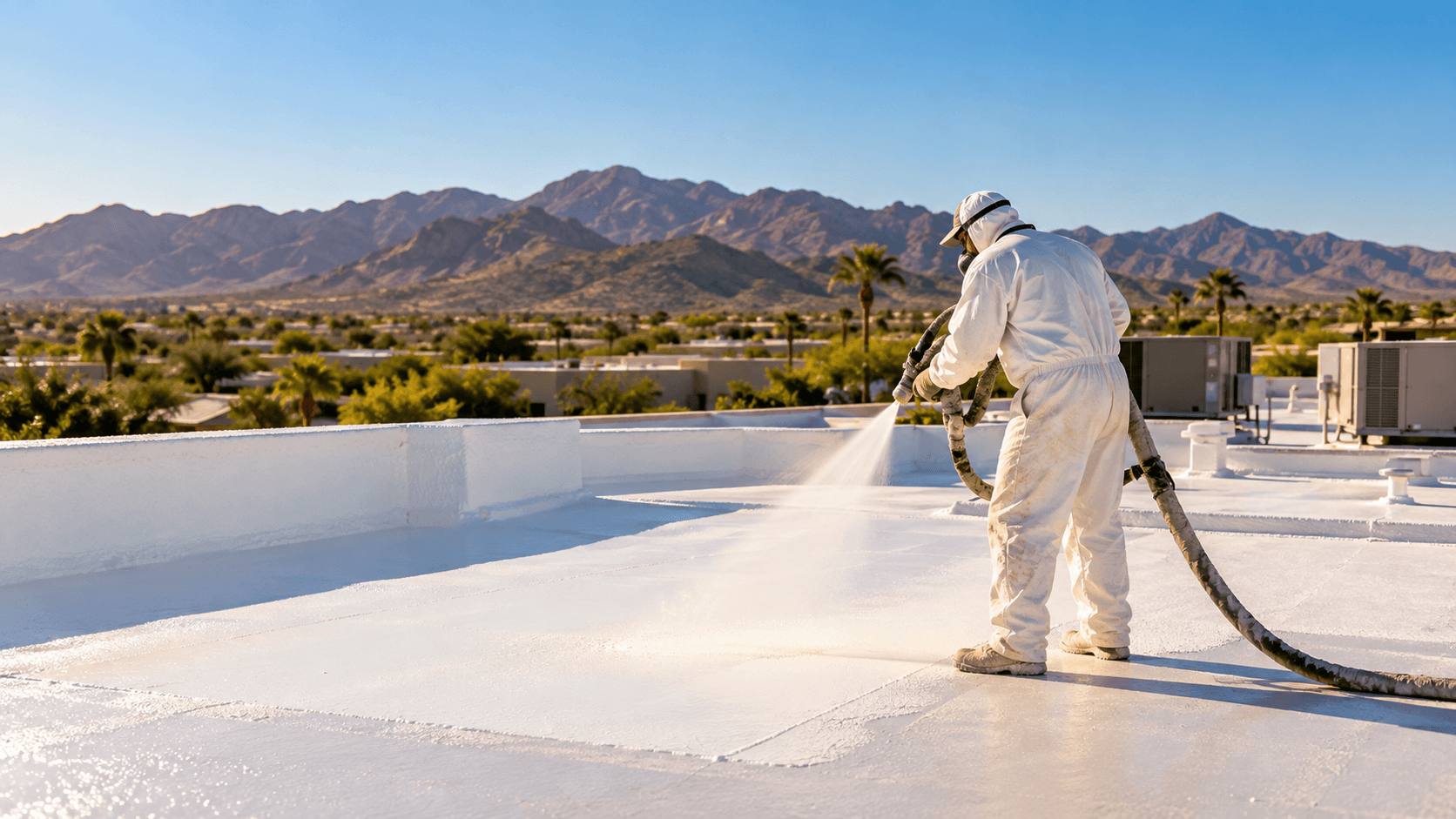
Spray polyurethane foam roofing is a roofing system created by applying liquid components that react and expand into a rigid foam layer. Once the foam is installed and prepared, a protective coating is applied to shield it from ultraviolet radiation and environmental exposure.
The result is a continuous roofing surface that can provide insulation and weather protection when properly designed and installed.
Unlike traditional single-ply membranes, which are manufactured in sheets and joined together during installation, SPF roofing is applied directly to an approved substrate or existing roofing surface.
This application method allows the foam to conform to roof contours, penetrations, and other details. However, the system still requires appropriate flashing, drainage, coating thickness, and installation quality.
The Spray Polyurethane Foam Alliance provides technical resources about SPF roofing systems, including installation practices, protective coatings, and maintenance considerations.
How the Roofing System Works
A typical SPF roofing assembly includes the prepared roof substrate, the spray-applied polyurethane foam, and a protective coating system.
The foam layer contributes thermal resistance and forms the underlying roofing surface. The coating protects the foam against sunlight, weathering, and other environmental conditions.
Depending on the selected system, coatings may include silicone, acrylic, polyurethane, or other manufacturer-approved materials.
Each coating has different performance characteristics and installation requirements.
For homeowners researching foam roofing Arizona applications, it is important to understand that the foam and coating function together. A foam layer without suitable protective coating is not a complete exposed roofing system.
Why Installation Quality Matters
SPF roofing requires specialized equipment and trained installers. Application conditions, surface preparation, material proportions, foam thickness, and coating coverage can influence the finished system.
The existing roof must also be evaluated before installation. Moisture, deteriorated materials, unsuitable substrates, or drainage problems may require corrective work.
A properly designed foam roofing project should identify the selected materials, installation requirements, drainage details, and maintenance expectations.
Property owners should avoid approving an estimate that describes the work only as “spray foam roofing” without identifying the actual system.
How Foam Roofing Performs in Arizona Heat
Arizona’s intense sunlight and high summer temperatures make heat performance an important consideration when evaluating roofing materials.
Foam roofing combines an insulating layer with a protective surface coating. These components serve different functions, but both can influence how the roofing assembly responds to solar exposure.
The foam provides thermal resistance, helping reduce heat transfer through the roofing system. The coating protects the foam and may also provide reflective characteristics, depending on the selected product.
Insulation and Solar Reflectance
Insulation and solar reflectance are related but different properties.
Insulation slows heat transfer through the roof assembly, while solar reflectance measures how much incoming sunlight is reflected by the exterior surface.
A reflective coating can reduce solar heat absorption compared with a less reflective surface under similar conditions.
The U.S. Department of Energy’s cool roof guidance explains how reflective roofing surfaces can reduce roof temperatures and influence cooling demand.
However, installing foam roofing does not guarantee a specific reduction in electricity bills.
Actual results depend on the existing insulation, roof design, building use, cooling equipment, and other conditions.
For foam roofing Arizona property owners are considering, the most useful comparison involves the complete roofing assembly rather than a general claim that foam roofs keep buildings cooler.
Why Roof Coating Color Matters
Many SPF roofing systems use light-colored protective coatings that can reflect a substantial portion of incoming sunlight.
However, coating color alone does not establish its exact solar performance.
Manufacturers may publish solar reflectance and thermal emittance ratings for specific products. These values allow property owners to compare finishes using measurable characteristics.
For example, two white roof coatings may have different initial or aged reflectance ratings because of their formulations and weathering characteristics.
Before approving foam roofing in Arizona, request the coating manufacturer’s specifications and confirm whether the proposed product has published solar performance ratings.
This helps separate verified performance information from general marketing claims.
5 Important Pros and Cons of Foam Roofing
Foam roofing offers characteristics that may make it suitable for certain Arizona properties, but those advantages should be weighed against installation requirements, maintenance, and long-term costs.
Understanding the tradeoffs helps property owners compare SPF roofing with other flat and low-slope systems.
1. Continuous Insulation
One of the main advantages of SPF roofing is its ability to provide a continuous layer of insulation across the roof surface.
Because the foam is applied in place, it can conform to roof contours and create an insulating layer with fewer interruptions than some assemblies using separate insulation boards.
This may help reduce thermal bridging in suitable roof designs.
However, the actual thermal performance depends on the foam thickness, material properties, existing roof assembly, and installation quality.
Property owners should request the proposed insulation thickness and relevant thermal resistance information rather than assuming every foam roof provides the same benefit.
2. Adaptability to Complex Roof Shapes
Spray foam can conform to irregular roof surfaces and certain complex details, making it worth considering for buildings with multiple penetrations or unusual roof configurations.
This characteristic may be useful on some commercial properties with rooftop equipment, mechanical penetrations, or complicated transitions.
However, foam application does not eliminate the need for proper flashing and waterproofing details.
The contractor must still evaluate drainage, penetrations, roof edges, and existing materials.
For foam roofing Arizona commercial properties may use, the ability to conform to complex surfaces can be an advantage when the complete system is properly designed.
3. Protective Coating Maintenance
A major consideration with SPF roofing is its dependence on a protective coating.
Polyurethane foam can deteriorate when exposed to ultraviolet radiation, making coating integrity essential to the roofing system.
Over time, coatings may experience wear, weathering, or localized damage. Maintenance and recoating may be necessary according to the selected system and manufacturer recommendations.
The Spray Polyurethane Foam Alliance’s roofing resources emphasize the importance of appropriate coatings and maintenance for SPF roof performance.
Property owners should understand the inspection schedule, coating requirements, and maintenance responsibilities before installation.
A foam roof should never be described as maintenance-free.
4. Sensitivity to Installation Conditions
SPF roofing is highly dependent on correct application procedures.
Surface moisture, unsuitable weather conditions, improper material mixing, or inadequate preparation can affect the quality of the finished foam.
This makes contractor experience and quality control particularly important.
A professional proposal should explain how the roof will be prepared, which materials will be used, and how installation conditions will be managed.
For property owners comparing foam roofing Arizona contractors may propose, installation expertise deserves as much attention as the product itself.
5. Physical Damage and Repair Requirements
Foam roofing can be damaged by sharp objects, equipment movement, or inappropriate foot traffic.
Rooftop maintenance activities may create punctures or other surface damage that require repair.
However, localized damage does not always mean the entire foam roof needs replacement. The appropriate response depends on the condition of the foam, coating, and surrounding materials.
Property owners should establish safe rooftop access procedures and coordinate maintenance activities with qualified professionals.
The Insurance Institute for Business & Home Safety provides research and guidance related to roofing systems, weather exposure, and building resilience.
For foam roofing Arizona buildings may use, maintenance planning should include how rooftop equipment servicing and other activities will be managed.
Why Protective Coatings Matter
The protective coating is one of the most important components of an SPF roofing system. Without appropriate protection, the foam can deteriorate under prolonged ultraviolet exposure.
Arizona’s intense sunlight makes coating selection and maintenance particularly relevant.
However, not every coating is suitable for every foam roofing application. Product compatibility, surface preparation, installation requirements, and environmental conditions must be considered.
Acrylic, Silicone, and Polyurethane Coatings
Acrylic coatings are commonly used in certain reflective roofing applications. Their suitability depends on the roof design, drainage conditions, and manufacturer requirements.
Silicone coatings are another option used in roofing systems, including applications where moisture resistance is an important consideration.
Polyurethane coatings may offer different physical and wear-resistance characteristics depending on the formulation.
These categories should not be treated as interchangeable.
For example, a coating suitable for one SPF roofing system may not be approved for another. The selected product must be compatible with the foam and applied according to the manufacturer’s specifications.
Coating Thickness and Inspection
A protective coating must be applied at the thickness and coverage specified for the selected system.
Insufficient coating coverage, improper preparation, or application defects can affect the protection provided to the foam beneath it.
After installation, property owners should receive maintenance recommendations and understand which conditions require professional attention.
Visible coating damage, exposed foam, or changes around penetrations may warrant inspection.
For foam roofing Arizona property owners are evaluating, a complete proposal should identify the coating manufacturer, product, installation requirements, and applicable warranty terms.
This information helps establish what is being installed and how the roofing system should be maintained over time.v
Where Foam Roofing Works Best in Arizona
Foam roofing Arizona property owners consider is most commonly associated with flat and low-slope roofs, particularly on commercial buildings and certain residential properties. Its spray-applied construction allows it to conform to existing roof contours and accommodate some complex roof features, but suitability depends on the condition and design of the complete roofing system.
A foam roof may be worth considering when a property needs additional insulation, has multiple rooftop penetrations, or requires a roofing solution that can be applied over an approved substrate. However, existing moisture damage, inadequate drainage, and deteriorated roofing materials must be evaluated before installation.
Commercial Buildings and Low-Slope Roofs
Commercial properties often have large roof surfaces, HVAC equipment, vents, and other penetrations. SPF roofing can accommodate certain complex configurations because the foam is applied directly to the prepared surface.
For example, a commercial building with several rooftop mechanical units may benefit from a roofing system that conforms to the surrounding roof geometry. However, the contractor must still design appropriate flashing, equipment transitions, drainage, and maintenance access.
The Spray Polyurethane Foam Alliance provides technical information about SPF roofing applications and installation considerations.
Before selecting foam roofing Arizona commercial property owners should confirm that the proposed system is appropriate for the existing substrate, roof slope, drainage conditions, and expected rooftop activity.
Residential Flat Roofs
Some Arizona homes feature flat or low-slope roof sections, including contemporary residences, patio additions, and other architectural designs.
Foam roofing may be considered for certain residential applications when the roof assembly is suitable and the installation meets applicable requirements.
However, a homeowner should not assume that foam is automatically the best option because the roof appears flat. TPO, PVC, modified bitumen, and other approved low-slope systems may also be appropriate.
The final decision should reflect the existing roof condition, insulation needs, maintenance expectations, and complete installation cost.
Foam Roofing vs. Other Flat Roofing Systems
Choosing foam roofing Arizona properties can accommodate requires comparing SPF with other roofing systems designed for low-slope applications.
Different systems provide weather protection through different materials and installation methods. Spray foam uses an applied insulating layer protected by a coating, while TPO and PVC use manufactured membranes with welded seams. Modified bitumen uses asphalt-based roofing materials installed using approved application methods.
The following comparison highlights practical differences that can help property owners understand their options.
| Roofing System | Main Characteristics | Important Considerations |
| Spray Polyurethane Foam | Spray-applied insulation with a protective coating | Skilled application, coating maintenance, substrate preparation |
| TPO Roofing | Single-ply thermoplastic membrane with heat-welded seams | Seam quality, drainage, membrane attachment |
| PVC Roofing | Thermoplastic membrane with heat-welded seams | Product compatibility, installation details, cost |
| Modified Bitumen | Asphalt-based membrane system | Installation method, seams, weathering, maintenance |
| Built-Up Roofing | Multiple layers of reinforcing materials and bitumen | System weight, installation complexity, maintenance |
Each system has advantages and limitations. A property with extensive rooftop equipment may require different installation details from a building with a simple, unobstructed roof.
Likewise, a roof that needs additional insulation may require a different assembly from one where the existing insulation remains suitable.
Why the Existing Roof Matters
The condition of the existing roof should be established before comparing replacement or restoration options.
If the roof has recurring leaks, trapped moisture, damaged insulation, or deteriorated decking, those concerns may require corrective work before a new roofing system can be installed.
Installing SPF over an unsuitable substrate can create problems that are not resolved by the foam’s insulating characteristics.
For foam roofing Arizona property owners are evaluating, a professional assessment should identify what can remain, what must be removed, and which roofing systems are compatible with the building.
Tier One Roofing’s commercial roofing services in Phoenix provide information about commercial roofing and flat-roofing solutions. Property owners should confirm which specific systems are available for their projects before assuming SPF installation is offered.
What Foam Roofing Maintenance Involves
Maintenance is one of the most important considerations when deciding whether foam roofing is worth the investment.
An SPF roof depends on its protective coating to shield the underlying foam from ultraviolet exposure and weathering. Over time, the coating may require inspection, localized repairs, or renewal according to the manufacturer’s requirements.
Regular maintenance can also help identify damage around rooftop equipment, penetrations, drainage outlets, and other vulnerable areas.
What Should Be Checked?
A professional foam roof inspection may evaluate:
- Protective coating condition and visible wear
- Areas where foam may be exposed
- Punctures or damage from rooftop activity
- Flashing around penetrations and equipment
- Roof drains, scuppers, and drainage pathways
- Previous repairs and signs of moisture intrusion
The purpose of an inspection is to identify actual concerns and determine whether maintenance, localized repairs, or more extensive work is appropriate.
A roof should not be recoated solely because it has reached an arbitrary age. The selected coating system, manufacturer requirements, existing condition, and maintenance history should guide the recommendation.
Can Foam Roofing Be Recoated?
Some SPF roofing systems can be recoated when the existing foam and roofing assembly remain suitable.
Recoating involves preparing the existing surface and applying a compatible protective coating according to the selected system’s requirements.
However, recoating is not a substitute for correcting wet insulation, damaged foam, unsuitable substrates, or significant structural problems.
For example, a roof with generally sound foam but deteriorating coating may be a candidate for maintenance or restoration. A roof with widespread moisture-related damage may require a different approach.
Homeowners and commercial property managers should request documentation explaining why recoating is appropriate and what preparation will be necessary.
What Affects Foam Roofing Costs in Arizona?
Foam roofing costs depend on roof size, existing conditions, insulation requirements, coating selection, installation complexity, and accessibility.
A straightforward low-slope roof may require less preparation and detailing than a commercial roof with multiple HVAC units, skylights, drains, and equipment supports.
The condition of the existing roof can also affect the project. Some substrates may be suitable for an approved SPF application after preparation, while others may require removal or repairs.
What a Foam Roofing Estimate Should Include
A professional proposal should identify the complete roofing system rather than listing only a price for spray foam.
Important details include the existing roof preparation, proposed foam thickness, thermal resistance, coating system, flashing, drainage work, and applicable warranties.
The estimate should also explain how unexpected conditions will be documented and priced.
For property owners comparing foam roofing Arizona contractors propose, the most useful estimate clearly separates necessary roof repairs from optional insulation or reflective coating upgrades.
Initial Cost vs. Long-Term Maintenance
The initial installation price should be considered alongside future maintenance requirements.
SPF roofing may provide insulation and a continuous applied surface, but protective coating maintenance remains part of ownership.
Property owners should ask about expected inspection intervals, manufacturer maintenance instructions, and the circumstances that may require recoating.
A lower installation price does not automatically mean lower long-term costs if important preparation, coating, or maintenance requirements have been excluded.
The U.S. Department of Energy’s cool roof guidance explains how reflective roofing characteristics can influence cooling performance, but any projected energy savings should be based on the building’s actual conditions.
Questions to Ask Before Choosing Foam Roofing
Before investing in SPF roofing, property owners should understand whether the proposed system is appropriate for the building and what responsibilities come with maintaining it.
A useful contractor discussion should address five questions.
1. Is the existing roof suitable for SPF installation?
The contractor should evaluate the substrate, moisture conditions, roof slope, drainage, and surrounding roofing components.
2. What foam and coating products will be installed?
Request the manufacturer, product specifications, proposed foam thickness, coating type, and applicable installation requirements.
3. How will drainage and rooftop equipment be handled?
Ask about roof penetrations, flashing, drains, equipment supports, and future maintenance access.
4. What maintenance will the system require?
The proposal should explain inspection recommendations, coating maintenance, and how damage should be addressed.
5. What warranty coverage applies?
Request the actual manufacturer and workmanship warranty documents, including relevant exclusions and maintenance obligations.
These questions help property owners compare foam roofing Arizona options based on the complete roofing system rather than relying on general promises about durability or energy savings.
Foam Roofing Arizona FAQs
Is Foam Roofing Good for Arizona Heat?
Foam roofing can provide thermal resistance through its insulating foam layer. A compatible reflective coating may also reduce solar heat absorption. However, actual cooling benefits depend on the roof assembly, building insulation, cooling equipment, and existing conditions.
How Long Does Foam Roofing Last in Arizona?
SPF roofing service life depends on installation quality, protective coating condition, weather exposure, maintenance, and the underlying roof assembly. There is no single lifespan that applies to every foam roof. Manufacturer specifications and professional inspections provide a better basis for maintenance planning.
Does Foam Roofing Need Recoating?
Many SPF roofing systems require coating maintenance or renewal over time. The timing depends on the coating product, existing condition, environmental exposure, and manufacturer recommendations. Recoating should follow a professional assessment rather than an arbitrary schedule.
Can Foam Roofing Be Installed Over an Existing Roof?
Some existing roofing systems may be suitable for SPF installation after appropriate preparation. However, compatibility, moisture conditions, structural requirements, and applicable building codes must be evaluated first. Damaged or unsuitable materials may require removal.
Is Foam Roofing Better Than TPO?
Neither system is automatically better for every building. SPF provides spray-applied insulation and requires protective coating maintenance, while TPO uses manufactured membrane sheets with heat-welded seams. The appropriate choice depends on the roof design, insulation needs, drainage, maintenance expectations, and project cost.
Can Foam Roofing Be Damaged by Foot Traffic?
Yes. Rooftop activity, dropped tools, sharp objects, and equipment servicing can damage foam roofing surfaces. Property owners should follow manufacturer guidance for access and arrange professional repairs when damage occurs.
Does Tier One Roofing Install Spray Foam Roofs?
Tier One Roofing provides commercial and flat-roofing services, but the availability of spray polyurethane foam installation should be confirmed directly with the company. Ask which roofing systems are offered for your property and whether SPF is among the available options.
Is Foam Roofing the Right Investment?
Foam roofing Arizona property owners consider can offer useful characteristics for certain flat and low-slope roofing applications. Its continuous insulating layer, ability to conform to complex surfaces, and compatibility with reflective protective coatings make it worth evaluating alongside other roofing systems.
However, SPF roofing requires appropriate substrate preparation, skilled installation, effective drainage, and ongoing coating maintenance. These requirements should be understood before choosing foam based on insulation benefits or initial cost alone.
For homeowners and commercial property managers, the strongest decision begins with evaluating the existing roof and identifying the building’s actual needs. A roof with complex equipment, inadequate insulation, or an aging membrane may require a different solution from a roof with widespread moisture damage.
Compare the complete roofing system, not simply the material name. Product specifications, installation requirements, maintenance responsibilities, and warranty terms should all be part of the decision.
If you are researching foam roofing Arizona properties may benefit from, contact Tier One Roofing to discuss your building’s roof condition and available flat-roofing options. The team can explain the roofing systems it offers and help determine an appropriate next step for your property.