Roofing
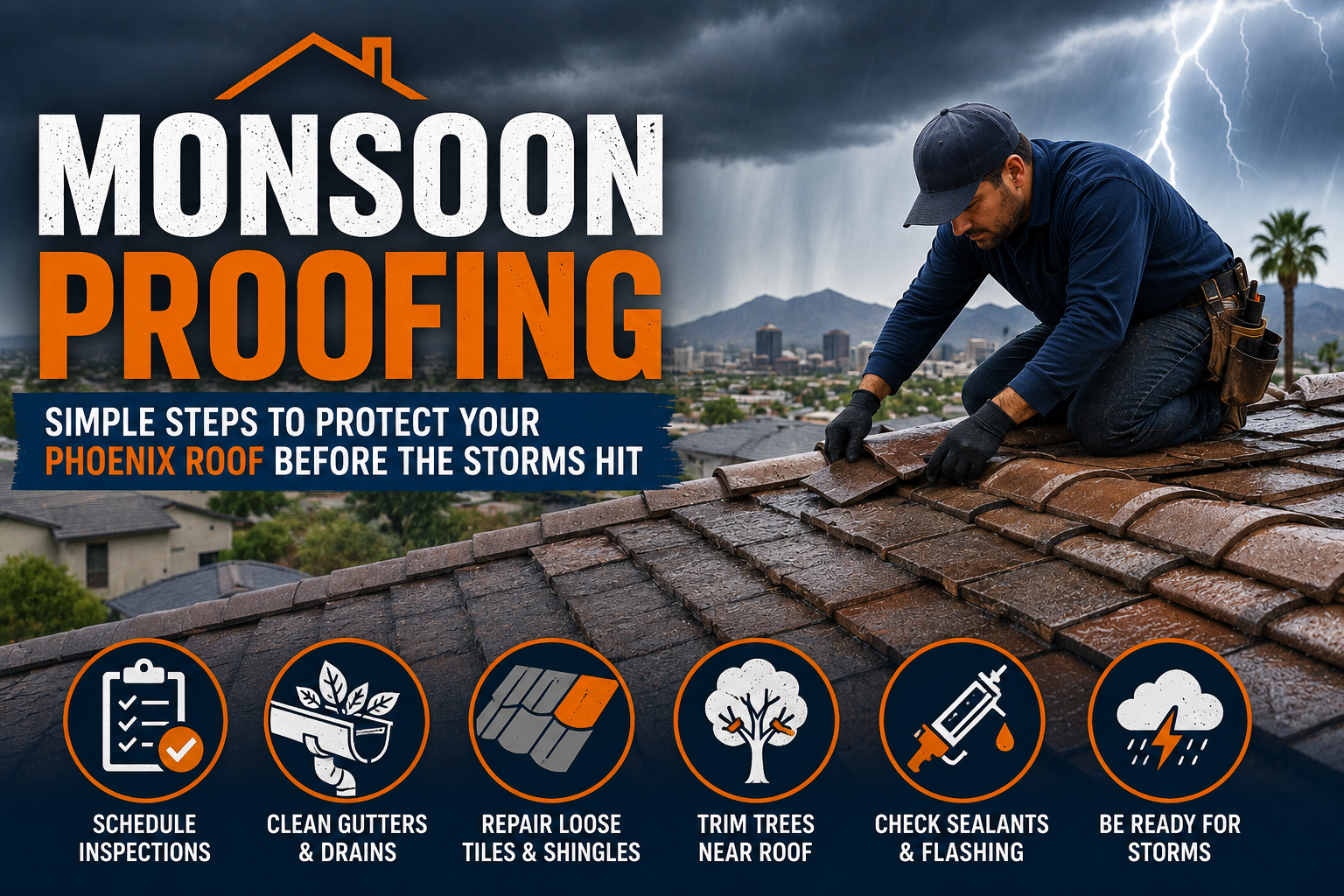
Monsoon Proofing: Simple Steps to Protect Your Phoenix Roof Before the Storms Hit
Phoenix roof monsoon protection is essential for homeowners who want to prevent storm damage before Arizona’s monsoon season begins. Phoenix roofs face extreme heat, intense UV exposure, high winds, heavy rainfall, dust storms, and flying debris, all of which can expose hidden roofing problems quickly.
While Arizona’s dry climate may seem easier on roofing systems for part of the year, monsoon storms can turn minor roof issues into costly leaks, damaged tiles, loose shingles, clogged gutters, and emergency repairs.
Homeowners throughout Phoenix, Scottsdale, Glendale, Mesa, Chandler, Peoria, Surprise, and nearby Arizona communities can reduce storm-related roofing problems by scheduling inspections, cleaning drainage systems, securing loose materials, and completing preventive roof maintenance before severe weather arrives.
Phoenix Roof Monsoon Protection Guide
Arizona’s monsoon season brings sudden and intense weather changes, including powerful winds, heavy rainfall, dust storms, and flying debris. These conditions can expose hidden roof vulnerabilities within hours.
Because Phoenix roofs endure year-round UV exposure and extreme heat, monsoon storms often accelerate existing wear and lead to unexpected damage. Effective Phoenix roof monsoon protection depends on early preparation, preventive maintenance, and timely inspections before storm activity begins.
Why Phoenix Homeowners Should Prepare Before Monsoon Season
Arizona roofing systems face constant stress from extreme heat, UV exposure, and thermal expansion throughout the year. When monsoon season arrives, sudden wind gusts, heavy rainfall, and airborne debris can quickly expose weakened areas of the roof.
These combined conditions increase the risk of lifted shingles, cracked tiles, damaged flashing, clogged drains, and water intrusion, especially in roofs that have not been regularly maintained or inspected.
Preparing early gives homeowners time to repair minor issues before they become expensive storm-related roofing problems.Table of Contents
Why Monsoon Season Is Hard on Phoenix Roofs
Arizona monsoon storms often bring:
- Wind gusts exceeding 50 mph
- Heavy rainfall
- Blowing debris
- Dust storms
- Rapid temperature changes
These weather conditions can damage shingles, tiles, flashing, gutters, and roofing membranes.
According to the National Weather Service Phoenix Monsoon Program, Arizona’s monsoon season frequently produces severe thunderstorms, flash flooding, damaging winds, and dust storms that can impact homes and roofing systems.
The combination of intense summer heat followed by sudden rain can place additional stress on roofing materials that have already been weakened by UV exposure.
Arizona Monsoon Roofing Facts
Many homeowners underestimate how quickly monsoon storms can damage a roof.
Common monsoon-related roofing risks include:
- Wind uplift that loosens shingles and tiles
- Water intrusion through damaged flashing
- Debris impact from falling branches
- Gutter overflow caused by storm debris
- Accelerated wear on aging roofing materials
Understanding these risks helps homeowners take preventative action before severe weather arrives.
Common Types of Monsoon Roof Damage
Wind Damage
Strong winds can:
- Lift shingles
- Crack roof tiles
- Loosen flashing
- Remove protective roofing materials
Water Intrusion
Heavy rainfall may exploit small vulnerabilities that are not noticeable during dry weather.
Water intrusion can lead to:
- Ceiling stains
- Mold growth
- Damaged insulation
- Structural deterioration
Debris Impact
Flying branches, loose objects, and storm debris can damage roofing surfaces during severe monsoon storms. Tile roofs may crack, shingles may tear, and flat roofing membranes may be punctured by sharp debris.
After a major storm, homeowners should inspect the property from the ground and look for fallen branches, broken tiles, displaced shingles, or visible roof debris.
Gutter Overflow
Blocked gutters may cause water to back up onto roofing materials and increase leak risks. When gutters cannot move water away from the home properly, water may overflow near fascia boards, roof edges, walls, and foundation areas.
Keeping gutters and downspouts clear is one of the simplest ways to reduce monsoon-related water damage.
How Monsoon Storms Affect Different Roof Types
Tile Roofs
Tile roofs are popular throughout Phoenix because of their durability and heat resistance. However, flying debris and strong winds can crack, shift, or dislodge tiles. Once tiles move out of place, the underlayment beneath may become exposed to water and UV damage.
Asphalt Shingle Roofs
High winds may loosen or remove shingles, creating openings where water can enter and damage the roof deck. Older shingles may be more vulnerable if they are brittle, curled, cracked, or already missing granules.Flat Roofs
Flat roofing systems can experience drainage issues if roof drains become blocked.
Flat Roofs
Flat roofing systems can experience drainage issues if roof drains, scuppers, or gutters become blocked. Standing water can increase the risk of leaks, coating deterioration, soft spots, and membrane damage.
Foam Roofs
Foam roofs require regular coating maintenance to remain resistant to water penetration and UV damage. If the protective coating becomes thin, cracked, or worn, monsoon rain can increase the risk of moisture problems.Schedule a Professional Roof Inspection Before Monsoon Season
The National Roofing Contractors Association (NRCA) recommends regular roof inspections to identify potential issues before they develop into costly repairs.
Schedule a Professional Roof Inspection Before Monsoon Season
One of the most effective ways to protect a Phoenix roof before monsoon season is to schedule a professional roof inspection in Phoenix.
A professional roof inspection can identify hidden issues before storm season begins, including:
- Loose shingles
- Cracked tiles
- Damaged flashing
- Aging sealants
- Existing leaks
- Drainage issues
The National Roofing Contractors Association provides roof inspection and maintenance resources that highlight the value of identifying roofing issues before they develop into more serious problems.
A professional inspection is especially important if your roof is older, has experienced previous storm damage, or has not been checked within the past year.
Clean Gutters and Roof Drainage Systems
Proper drainage is essential during Arizona monsoon storms. When gutters, downspouts, roof drains, or scuppers become clogged, water may overflow and pool around vulnerable areas of the roof.
Common gutter blockages include:
- Leaves
- Dirt
- Roofing granules
- Debris
Water may overflow and pool around vulnerable areas of the roof.
Monsoon Preparation Checklist
✔ Clean gutters
✔ Remove roof debris
✔ Inspect downspouts
✔ Test drainage flow
✔ Check roof valleys
✔ Clear rooftop drains
Secure Loose Roofing Materials
Before monsoon season arrives, inspect your roof for:
- Missing shingles
- Loose tiles
- Damaged flashing
- Exposed fasteners
Homeowners who address small repairs early often avoid costly emergency service calls later.
Trim Trees Near Your Roof
Overhanging branches present a significant risk during monsoon storms.
Tree limbs may:
- Scratch roofing materials
- Break roof tiles
- Damage gutters
- Fall onto the roof during strong winds
Maintaining safe clearance between trees and roofing systems reduces storm-related risks.
Check Roof Flashing and Sealants
The EPA UV Index Program provides information about UV exposure and its long-term effects.
Flashing protects vulnerable areas around:
- Chimneys
- Skylights
- Roof vents
- Valleys
Over time, flashing and sealants can deteriorate due to Phoenix’s extreme heat.
Consider Preventative Roof Maintenance
Preventative maintenance can extend roof life and improve storm resistance. It can also help homeowners avoid larger repair costs by addressing minor problems early.
| Maintenance Service | Potential Benefit |
|---|---|
| Roof inspection | Identifies hidden damage |
| Minor repairs | Prevents larger issues |
| Sealant replacement | Improves waterproofing |
| Gutter cleaning | Enhances drainage |
| Flashing repair | Reduces leak potential |
| Debris removal | Helps prevent drainage problems |
The U.S. Department of Energy notes that properly maintained roofing systems can improve overall energy efficiency and reduce heat absorption.
Preventive roof maintenance is especially important in Phoenix because roofing systems are exposed to heat, UV rays, dust, wind, and sudden seasonal storms.
Average Monsoon Roof Repair Costs in Phoenix
Minor monsoon roof repairs in Phoenix typically range from small sealant fixes to more extensive shingle or tile replacements depending on storm severity. Early detection helps reduce overall repair costs and prevents structural escalation.
Preventive Maintenance vs Emergency Roof Repairs
| Preventive Maintenance | Emergency Repairs |
|---|---|
| Lower Cost | Higher Cost |
| Scheduled Service | Urgent Service Call |
| Prevents Damage | Addresses Existing Damage |
| Extends Roof Life | May Require Major Repairs |
| Improves Storm Readiness | Often Follows Storm Damage |
Know When to Repair and When to Replace
According to the Federal Emergency Management Agency (FEMA), preparedness and preventative maintenance play an important role in protecting homes from severe weather. Addressing roofing issues before monsoon season can help minimize property damage and reduce repair costs.
Repair May Be Best If
✔ Damage is localized
✔ Roof is under 15 years old
✔ Leaks are limited
✔ Structure remains sound
Replacement May Be Best If
✔ Multiple leaks exist
✔ Extensive storm damage is present
✔ Roof has reached the end of its lifespan
✔ Repairs are becoming frequent
Monsoon Preparation Timeline
Pre-Monsoon (April–June)
- Full roof inspection
- Repairs and reinforcement
- Gutter cleaning
During Monsoon (July–September)
- Post-storm visual checks
- Emergency leak monitoring
Post-Monsoon
- Damage assessment
- Preventive repair planning
Real-World Monsoon Damage Scenarios
Scenario 1: Loose Tile Before a Storm
A homeowner notices a cracked tile during a routine inspection. The tile is replaced before monsoon season, preventing water intrusion.
Scenario 2: Clogged Gutters Cause Interior Damage
Debris-filled gutters prevent proper drainage. Water backs up beneath roofing materials and causes ceiling stains.
Scenario 3: Damaged Flashing Creates Leaks
A flashing failure goes unnoticed until a monsoon storm exposes the weakness.
Why Phoenix Roof Monsoon Protection Should Be a Priority
Many roofing emergencies occur because minor issues were ignored before storm season.
Investing in preventative maintenance can:
- Reduce repair costs
- Extend roof lifespan
- Improve energy efficiency
- Protect property value
- Minimize storm-related disruptions
Why Professional Roof Inspections Matter
A professional roofing inspection helps identify issues that homeowners may overlook.
Inspections can reveal:
- Hidden leaks
- Damaged flashing
- Cracked tiles
- Worn sealants
- Drainage problems
- Storm-related damage
People Also Ask
What is the best way to protect a roof during monsoon season?
Regular inspections, gutter cleaning, flashing repairs, and preventative maintenance help reduce storm damage risks.
Can monsoon storms damage roof tiles?
Yes. Strong winds and flying debris can crack or dislodge roof tiles.
How often should Phoenix homeowners inspect their roofs?
At least once per year and after major storms.
Is preventative roof maintenance worth the cost?
Yes. Preventative maintenance often costs significantly less than emergency roof repairs.
Frequently Asked Questions
When does monsoon season start in Phoenix?
Arizona monsoon season officially runs from June 15 through September 30.
How can I prepare my roof for monsoon season?
Schedule inspections, clean gutters, repair damaged roofing materials, and trim nearby trees.
Can monsoon storms cause roof leaks?
Yes. Heavy rain and high winds can expose vulnerabilities and create leaks.
How often should I inspect my roof?
At least annually and after severe weather events.
Can clogged gutters damage my roof?
Absolutely. Poor drainage can contribute to leaks and water damage.
Is professional roof maintenance worth it?
Routine maintenance often extends roof lifespan and reduces repair costs.
What causes roof damage during monsoon season?
High winds, heavy rainfall, flying debris, clogged gutters, and aging roofing materials are common causes.
Should I repair minor roof damage before monsoon season?
Yes. Small repairs completed early can help prevent larger and more expensive problems later.
Can monsoon storms shorten the lifespan of a roof?
Yes. Repeated exposure to strong winds, heavy rainfall, and flying debris can accelerate wear and tear on roofing materials.
What should homeowners inspect after a monsoon storm?
Homeowners should look for missing shingles, cracked tiles, damaged flashing, clogged gutters, and signs of water intrusion.
Phoenix Roof Monsoon Protection Tips for Long-Term Roof Health
A strong roof in Arizona’s climate depends on ongoing maintenance throughout the year. Preparing for monsoon season involves regular inspections, early repairs, and preventive upkeep before severe weather arrives.
In addition, trimming overhanging tree branches and removing debris from the roof can help reduce the risk of storm-related damage. Scheduling a professional inspection at least once a year allows potential issues to be identified before they become costly repairs.
By investing in proactive protecting roofs during monsoon season, homeowners can extend the lifespan of their roofing system, improve energy efficiency, and better protect their property from the strong winds, heavy rain, and flying debris commonly associated with Arizona’s monsoon season.
About Tier One Roofing
Tier One Roofing provides residential and commercial roofing services throughout Phoenix and surrounding communities. Our team specializes in roof inspections, repairs, replacements, storm damage restoration, and preventative maintenance designed for Arizona’s unique climate conditions.
When Phoenix Roof Monsoon Protection Requires a Roofing Contractor
Some monsoon preparation tasks, such as removing light debris or checking gutters from the ground, may be simple for homeowners to monitor. However, roofing repairs should be handled by a qualified contractor when there are missing shingles, cracked tiles, damaged flashing, soft spots, recurring leaks, or signs of storm damage.
A professional roofing contractor can determine whether the roof needs minor maintenance, roof leak repair, storm damage repair, or roof replacement in Phoenix. This helps homeowners avoid temporary fixes that may fail during the next round of heavy rain or high winds.
Conclusion
Phoenix roof monsoon protection should begin before the first major storm arrives. Strong winds, heavy rain, dust storms, and flying debris can quickly turn small roofing issues into expensive repairs if a roof is not properly maintained.
By scheduling a roof inspection, cleaning gutters, repairing loose materials, checking flashing, trimming trees, and completing preventive maintenance, Phoenix homeowners can improve roof performance and reduce the risk of storm-related damage.
If your roof has missing shingles, cracked tiles, clogged drainage, damaged flashing, or signs of leaking, contact Tier One Roofing before monsoon storms create larger problems. A proactive inspection can help protect your home, extend roof life, and give you more confidence before severe weather hits.