Roofing
Roof Flashing Arizona: 7 Signs It’s Failing and What to Do
Roof flashing Arizona is one of the most important yet overlooked components of a roofing system. While homeowners often focus on replacing broken roof tiles or repairing shingles, damaged roof flashing is one of the leading causes of roof leaks and water intrusion. Properly installed roof flashing Arizona creates a waterproof seal around the most vulnerable areas of your roof, helping protect your home from moisture, extreme heat, and seasonal monsoon storms.
Arizona’s harsh climate places constant stress on every roofing system. Intense UV exposure, triple-digit temperatures, high winds, and sudden monsoon rains can cause roof flashing to expand, contract, loosen, or corrode over time. When roof flashing Arizona begins to fail, even a small gap can allow water to penetrate beneath your roofing materials, leading to wood rot, mold growth, damaged insulation, and costly structural repairs.
Many homeowners don’t notice flashing problems until they see water stains on ceilings or experience an active roof leak. However, regular roof inspections and early roof flashing repair Arizona services can prevent minor issues from becoming expensive roofing emergencies. Knowing the warning signs and understanding how flashing protects your home can help extend the life of your entire roofing system.
In this guide, you’ll learn what roof flashing is, why roof flashing Arizona is essential, the seven warning signs of flashing failure, and when it’s time to schedule a professional roof inspection or roof flashing repair.
What Is Roof Flashing Arizona?
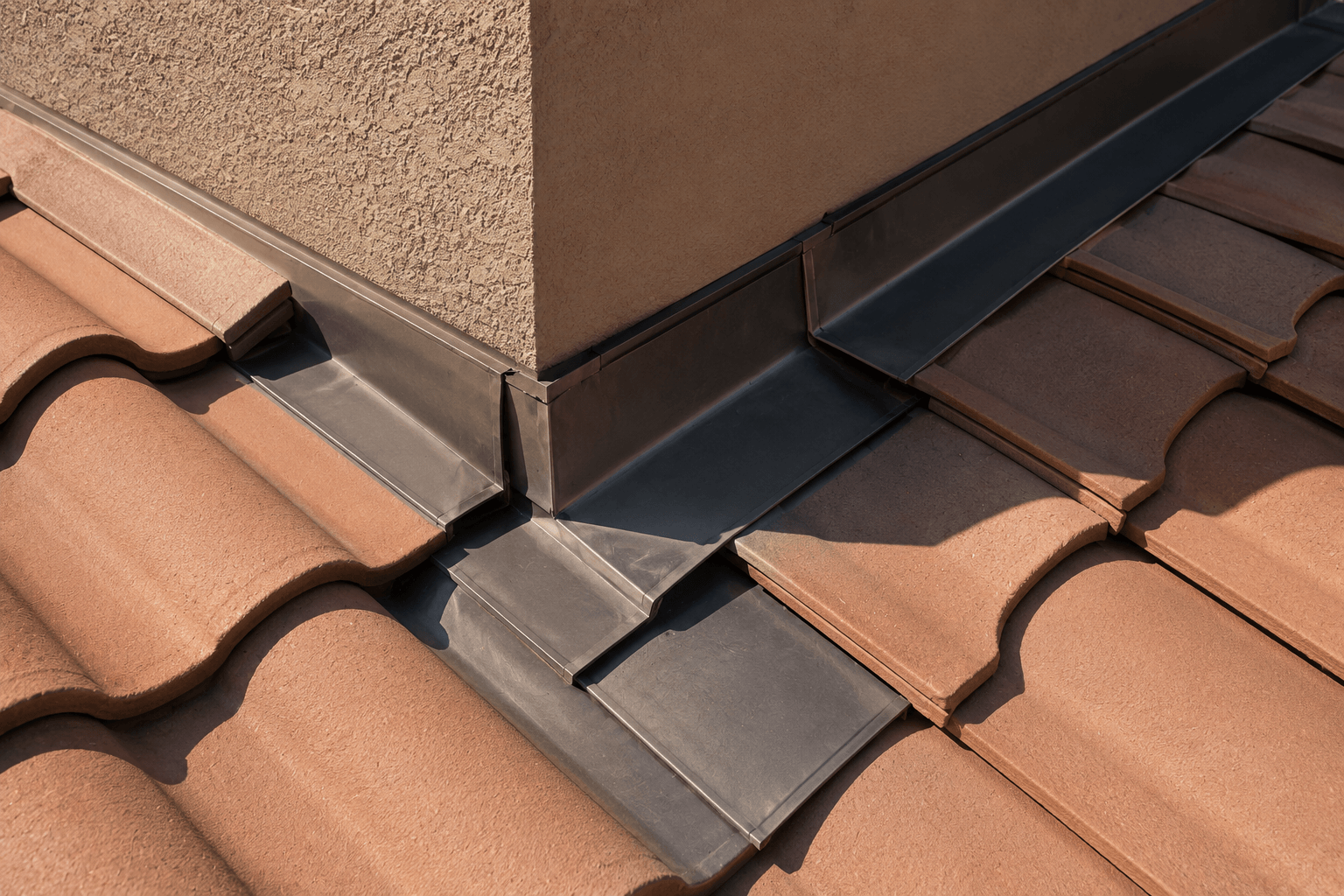
Roof flashing is a thin, durable material—typically made from galvanized steel, aluminum, or copper—that directs water away from vulnerable areas of the roof. It is installed anywhere two roof surfaces meet or where roofing materials intersect with other structures.
Common locations where roof flashing Arizona is installed include:
- Around chimneys
- Along roof valleys
- Around skylights
- Around plumbing vent pipes
- Along roof edges
- Where walls meet the roof
- Around dormers
- Near roof-to-wall transitions
Without properly installed roof flashing, rainwater can easily seep beneath roofing materials and damage the roof deck, attic, insulation, and even your home’s interior.
Choosing corrosion-resistant flashing materials is essential for long-term roof performance. TAMKO’s MetalWorks® flashing accessories are designed to help create durable, weather-resistant roofing systems.
Because Arizona homes experience frequent temperature fluctuations and seasonal storms, maintaining roof flashing Arizona is essential for long-term roof performance.
Why Roof Flashing Arizona Is Essential for Every Roof
Roof flashing works as your roof’s first line of defense against water intrusion in its most vulnerable areas. Even the highest-quality roof tiles or shingles cannot completely prevent water from entering roof joints without properly functioning flashing.
Professional roof flashing Arizona installation helps homeowners:
- Prevent roof leaks
- Protect the roof deck from moisture
- Reduce the risk of mold and mildew
- Extend the lifespan of the roofing system
- Protect chimneys, skylights, and vents
- Minimize costly roof repairs
- Improve overall roof performance
Roof flashing is only one part of a complete roofing system. Learn how flashing, underlayment, ventilation, and roofing materials work together in our guide to residential roofing in Wickenburg.
Since flashing is constantly exposed to Arizona’s harsh weather conditions, regular roof inspections are critical for identifying early signs of wear before major damage occurs.
How Arizona Weather Damages Roof Flashing
Arizona’s climate is one of the toughest environments for roofing materials. Continuous exposure to heat, sunlight, dust, high winds, and seasonal monsoon storms gradually weakens roof flashing over time.
Common causes of roof flashing Arizona deterioration include:
- Prolonged UV exposure
- Thermal expansion and contraction
- Heavy monsoon rainfall
- Wind-driven debris
- Rust and corrosion on older flashing
- Improper installation
- Aging roofing materials
As flashing begins to deteriorate, it may separate from the roof surface, develop cracks, or allow moisture to enter beneath roofing materials.
Routine roof inspections help identify these issues early, allowing homeowners to complete roof flashing repair Arizona before extensive water damage develops.
Common Areas Where Roof Flashing Fails
Not every section of flashing experiences the same amount of stress. Certain areas are much more likely to develop leaks because they receive concentrated water flow or experience frequent movement caused by temperature changes.
Pay close attention to flashing located around:
Chimneys
The intersection between a chimney and the roof is one of the most common sources of roof leaks. Cracked sealant or loose flashing allows water to enter during heavy rain.
Roof Valleys
Roof valleys channel large amounts of rainwater during monsoon storms. Damaged valley flashing can quickly lead to moisture intrusion beneath roofing materials.
Skylights
Skylights rely on properly installed flashing to prevent leaks around the window frame. Aging flashing often causes water stains around interior ceilings.
Plumbing Vent Pipes
Rubber boots and flashing around plumbing vents gradually deteriorate due to prolonged UV exposure and extreme Arizona heat.
Roof-to-Wall Connections
Areas where vertical walls meet the roof require properly installed step flashing. If this flashing becomes loose or damaged, rainwater can easily penetrate the roofing system.
Understanding where roof flashing Arizona commonly fails allows homeowners to monitor these vulnerable areas and schedule repairs before leaks occur.
7 Signs Your Roof Flashing Arizona Is Failing
Roof flashing problems rarely happen overnight. In most cases, flashing deteriorates gradually due to years of exposure to Arizona’s intense heat, UV rays, monsoon storms, and seasonal temperature changes. Recognizing these warning signs early can help homeowners schedule roof flashing repair Arizona before small problems turn into major roof leaks.
1. Water Stains on Ceilings or Walls
Brown stains on ceilings or interior walls often indicate moisture entering through damaged roof flashing rather than failed roofing materials. Water can travel along the roof structure before becoming visible inside your home.
If you notice water stains after a monsoon storm, schedule a professional roof inspection Arizona to determine whether roof flashing Arizona is allowing water intrusion.
2. Rusted or Corroded Roof Flashing
Metal flashing naturally wears over time. Older galvanized steel flashing may begin to rust, while aluminum flashing can become weakened after years of weather exposure.
Signs of corrosion include:
- Rust spots
- Peeling protective coatings
- Flaking metal
- Small holes
- Discoloration
Replacing damaged flashing before corrosion spreads helps prevent expensive roof repairs.
3. Loose or Lifted Flashing
Arizona’s high winds and constant thermal expansion can cause flashing to loosen from the roof.
Loose flashing may:
- Create visible gaps
- Allow water beneath roofing materials
- Lift during strong winds
- Separate from walls or chimneys
Loose flashing should never be ignored because even a small opening can become a major leak during heavy rainfall.
4. Cracked Roofing Sealant
Many flashing systems rely on roofing sealants to create a waterproof barrier.
Over time, Arizona’s intense sunlight causes sealants to:
- Dry out
- Crack
- Shrink
- Separate from flashing
Replacing deteriorated sealant is often one of the simplest ways to extend the life of roof flashing Arizona before more extensive repairs become necessary.
5. Roof Leaks During Monsoon Season
One of the clearest warning signs of failing roof flashing Arizona is water entering the home during heavy rain.
Leaks commonly occur around:
- Chimneys
- Skylights
- Roof valleys
- Plumbing vents
- Roof-to-wall connections
If leaks appear only during storms, damaged flashing is often the underlying cause.
6. Missing or Damaged Flashing
Strong winds, aging fasteners, or previous roofing work can leave sections of flashing bent, cracked, or completely missing.
Missing flashing exposes the roof deck to moisture and significantly increases the risk of roof leaks.
7. Mold or Moisture in the Attic
Small flashing leaks may not immediately appear inside your living space. Instead, moisture can accumulate in the attic over time.
Watch for:
- Damp insulation
- Mold growth
- Musty odors
- Wet roof decking
- Water stains on rafters
These signs often indicate long-term moisture intrusion that should be addressed immediately.
Roof Flashing Repair vs. Roof Flashing Replacement
Not every flashing problem requires a complete replacement. The right solution depends on the age of the flashing, the extent of the damage, and the overall condition of your roofing system.
Roof Flashing Repair May Be Enough If:
- Small sections have lifted
- Sealant has cracked
- Fasteners have loosened
- Minor leaks are detected early
- Flashing remains structurally sound
Roof Flashing Replacement Is Often Recommended If:
- Flashing has extensive rust or corrosion
- Metal has cracked or separated
- Multiple leak locations exist
- Flashing is missing
- A roof replacement is already planned
Proper flashing installation is just as important as selecting quality roofing materials. IKO Roofing’s roof system components are engineered to work together for improved weather protection and long-term durability.
An experienced Arizona roofing contractor can determine whether repair or replacement offers the best long-term value.
How Professional Roof Inspections Prevent Flashing Problems
Most flashing damage develops slowly and remains hidden until water reaches the interior of the home. Regular roof inspections help identify these problems before costly repairs become necessary.
During a professional roof inspection Arizona, contractors evaluate:
- Roof flashing condition
- Roofing materials
- Roof valleys
- Chimneys
- Skylights
- Vent pipe flashing
- Sealants
- Signs of moisture intrusion
Homeowners should schedule a roof inspection:
- Once every year
- After severe monsoon storms
- After high-wind events
- Before purchasing a home
- When roof leaks are suspected
Routine inspections extend the life of roof flashing Arizona while helping homeowners avoid expensive emergency repairs.
Choosing the Right Arizona Roofing Contractor
Proper flashing installation requires experience and attention to detail. Even premium flashing materials cannot protect a roof if they are installed incorrectly.
When choosing a roofing contractor, look for a company that:
- Specializes in Arizona roofing systems
- Performs detailed roof inspections
- Has experience with flashing repair and replacement
- Uses quality flashing materials
- Provides workmanship warranties
- Has positive customer reviews
- Explains repair options clearly
Many professional contractors recommend complete roofing systems that include compatible flashing products. Malarkey Roofing Products manufactures roofing components designed to improve long-term roof performance.
Working with a trusted roofing contractor ensures your roof flashing Arizona is installed correctly and continues protecting your home for years. Choosing experienced professionals is essential for proper flashing installation and long-term roof performance. See what to look for when hiring roofers in Wickenburg.
Frequently Asked Questions About Roof Flashing Arizona
What is roof flashing?
Roof flashing is a thin metal material installed around roof joints, chimneys, skylights, valleys, and vents to direct water away from vulnerable areas and help prevent roof leaks.
How long does roof flashing last in Arizona?
Most roof flashing lasts 20 to 30 years, depending on the material, installation quality, and exposure to Arizona’s extreme weather conditions.
Can damaged roof flashing cause roof leaks?
Yes. Damaged or loose roof flashing Arizona is one of the most common causes of roof leaks because it allows water to enter beneath roofing materials.
Can roof flashing be repaired without replacing the roof?
In many cases, yes. Minor flashing issues such as loose sections or deteriorated sealant can often be repaired without replacing the entire roof.
How often should roof flashing be inspected?
Professional roof inspections are recommended at least once a year and after major storms to ensure roof flashing Arizona remains in good condition.
Conclusion
Roof flashing Arizona may be a small part of your roofing system, but it plays a critical role in protecting your home from water intrusion, roof leaks, and long-term structural damage. Whether installed around chimneys, skylights, roof valleys, or plumbing vents, properly functioning flashing helps direct water away from vulnerable areas and preserves the integrity of your entire roof.
Ignoring damaged flashing can lead to expensive repairs, mold growth, deteriorated roof decking, and premature roof replacement. By recognizing the warning signs early and scheduling regular roof inspection Arizona services, homeowners can address flashing problems before they become major issues.
If you suspect your roof flashing Arizona is damaged or overdue for inspection, the experienced team at Tier One Roofing is here to help. We provide professional roof inspections, roof flashing repair, roof maintenance, and complete roofing solutions designed to keep Arizona homes protected through every season. Contact Tier One Roofing today to schedule an inspection and keep your roofing system performing at its best.