Roofing
Roof Deck Arizona: What Homeowners Should Know
Most homeowners rarely think about what lies beneath their roofing materials. Shingles, tiles, or metal panels are easy to see, but the structural layer supporting them often goes unnoticed. That hidden layer is the roof deck, and it plays a vital role in the strength, safety, and longevity of your entire roofing system. Understanding the importance of roof deck Arizona can help homeowners recognize potential problems early and protect their investment for years to come.
Arizona’s climate creates unique challenges for residential roofs. Intense summer heat, prolonged UV exposure, seasonal monsoon storms, and occasional heavy rainfall place constant stress on roofing materials. While shingles and underlayment absorb much of this exposure, the roof deck provides the structural foundation that supports everything above it. If the roof deck becomes damaged, weakened, or exposed to moisture, the performance of the entire roof can quickly decline.
Because the roof deck is hidden beneath multiple roofing layers, problems often remain unnoticed until significant damage has already occurred. Roof leaks, sagging rooflines, deteriorating decking, and moisture intrusion frequently begin below the surface, making routine roof inspections essential for Arizona homeowners.
Learning how roof deck Arizona functions, what causes damage, and how to maintain it can help prevent expensive repairs while extending the life of your roof. Whether you’re planning a roof replacement or simply want to understand how your roofing system works, knowing more about the roof deck is an important step toward protecting your home.
What Is Roof Deck Arizona and Why Is It Important?
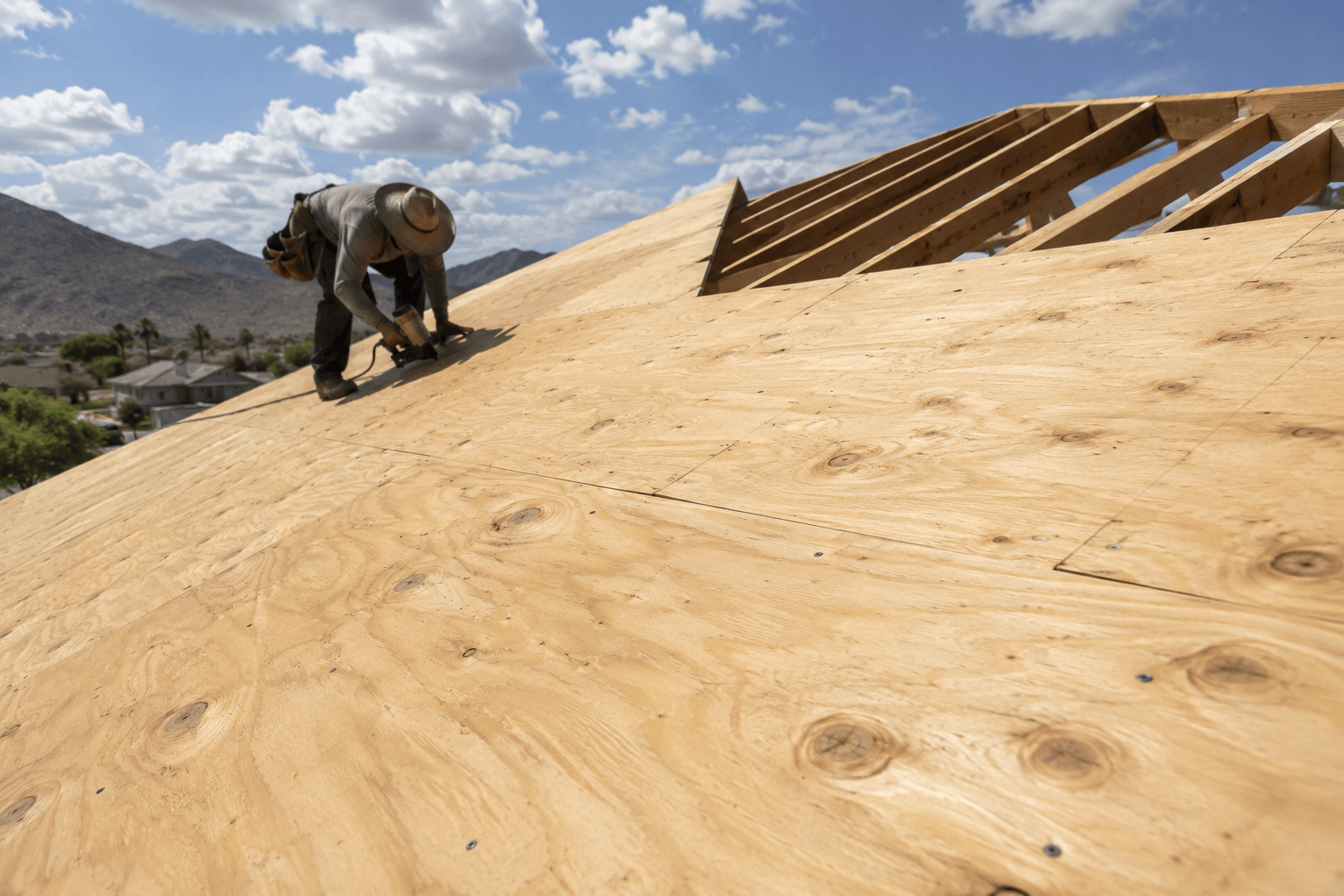
Roof deck Arizona refers to the structural surface attached directly to the roof framing. It creates the solid foundation where roofing underlayment, shingles, tiles, or metal roofing panels are installed.
The roof deck is typically fastened to roof rafters or trusses, forming a continuous platform that supports the weight of the roofing system while distributing loads across the structure.
A properly installed roof deck performs several important functions:
- Supports roofing materials
- Strengthens the roof structure
- Provides a stable surface for underlayment installation
- Helps distribute roof loads evenly
- Protects the home’s interior from structural movement
- Contributes to the overall durability of the roofing system
Without a strong roof deck, even high-quality roofing materials cannot perform as intended.
Why Roof Deck Arizona Is One of the Most Important Parts of Your Roofing System
Many roofing components work together to protect your home, but the roof deck serves as the foundation for everything installed above it. Every layer of your roofing system depends on the roof deck remaining structurally sound.
Roof deck Arizona supports:
- Roof underlayment
- Asphalt shingles
- Concrete or clay roof tiles
- Metal roofing panels
- Roof flashing
- Ridge vents
- Drip edge
- Roof valleys
When the roof deck begins to weaken, the surrounding roofing materials may also become vulnerable to damage. Moisture intrusion, sagging sections, loose fasteners, and premature roof deterioration often originate beneath the roofing surface.
For this reason, professional roofing contractors inspect the condition of the roof deck whenever a roof replacement or major repair is performed.
How Roof Deck Arizona Supports the Entire Roofing System
Although homeowners rarely see it, roof deck Arizona performs several critical structural functions that help protect both the roof and the home below.
Provides Structural Support
The roof deck creates the solid base that supports the entire roofing system. Every roofing material installed on your home depends on a stable deck for proper performance.
A strong roof deck helps:
- Support roofing materials evenly
- Reduce movement across the roof
- Improve structural stability
- Distribute weight across rafters and trusses
- Increase overall roof durability
Without adequate structural support, roofing materials may shift, crack, or wear prematurely.
Creates a Secure Surface for Roofing Materials
Roofing materials cannot be installed directly onto roof framing. Instead, they are attached to the roof deck, which provides a flat, continuous surface for fastening underlayment and exterior roofing materials.
This secure foundation helps:
- Improve installation quality
- Reduce fastener movement
- Maintain proper roof alignment
- Improve resistance to high winds
- Extend the lifespan of roofing materials
Some modern roof-deck systems combine structural sheathing with a built-in weather barrier to improve moisture protection during construction. Huber Engineered Woods provides an example through its ZIP System roof and wall sheathing, which is designed for structural roof applications.
Proper installation begins with a solid roof deck that meets current building standards.
Supports Roof Underlayment
The roof deck also serves as the base for the roof underlayment, one of the most important moisture barriers in any roofing system.
Once installed over the deck, underlayment helps protect the wood beneath from:
- Wind-driven rain
- Ice and water intrusion
- Moisture penetration
- Temporary weather exposure during roof replacement
The roof deck and underlayment must work together to keep moisture away from the structural framing. Learn why roof underlayment Arizona is an essential secondary barrier beneath tiles, shingles, and other roofing materials.
Together, the roof deck and underlayment create multiple layers of protection that improve the long-term performance of Arizona roofing systems.
Helps Distribute Roof Loads
Every roof experiences constant structural loads throughout its lifespan. Roofing materials, maintenance traffic, strong winds, and seasonal weather all place pressure on the structure.
Roof deck Arizona helps distribute these loads evenly across the roof framing, reducing stress on individual rafters or trusses.
Proper load distribution helps:
- Maintain structural stability
- Prevent localized sagging
- Improve roof performance
- Increase the lifespan of the framing system
A strong roof deck still depends on healthy framing beneath it to distribute weight safely across the structure. Read our guide to roof rafters Arizona to understand how damaged framing can cause movement, sagging, and structural weakness.
This structural role becomes especially important during Arizona’s monsoon season when roofs experience sudden wind and rain events.
Improves Overall Roof Performance
A healthy roof deck contributes to nearly every aspect of roofing performance. Because it supports multiple roofing components, maintaining the deck helps preserve the integrity of the entire system.
A properly maintained roof deck Arizona helps:
- Improve roof durability
- Reduce the likelihood of roof leaks
- Support ventilation systems
- Increase energy efficiency
- Extend the lifespan of roofing materials
- Protect the home’s structural framework
Even though homeowners rarely see the roof deck, it remains one of the most important components beneath every residential roof.
Common Materials Used for Roof Deck Arizona
Several materials are commonly used to build residential roof decks. The material selected depends on the home’s design, local building codes, roof type, and structural requirements.
Plywood
Plywood has long been one of the most common roof decking materials because it offers excellent strength, durability, and moisture resistance when properly installed.
Benefits include:
- Strong structural support
- Reliable fastener holding strength
- Good resistance to warping
- Suitable for many roofing systems
Plywood remains a dependable option when the roof design requires strong fastener holding and impact resistance. Georgia-Pacific showcases its Plytanium plywood rated sheathing for residential and light-commercial roof applications.
Oriented Strand Board (OSB)
OSB is widely used in modern residential construction due to its consistent performance and affordability.
Advantages include:
- Uniform manufacturing
- Excellent structural strength
- Cost-effective installation
- Reliable performance when properly protected
Tongue-and-Groove Wood Decking
Some older Arizona homes use tongue-and-groove wood planks instead of sheet decking.
Although these systems remain structurally sound in many homes, they should be carefully inspected during roof replacement projects to ensure they continue meeting modern roofing requirements.
Concrete Roof Decks
Some commercial buildings and certain residential structures use concrete roof decks because of their durability and structural capacity.
Concrete roof decks provide:
- High strength
- Excellent fire resistance
- Long service life
- Strong support for flat roofing systems
While less common on residential homes, concrete roof decks are frequently found on commercial roofing projects throughout Arizona.
Common Roof Deck Arizona Problems Homeowners Should Watch For
Although the roof deck is protected beneath the roofing materials, it is not immune to damage. Years of exposure to heat, moisture, roof leaks, and aging roofing materials can gradually weaken the deck and affect the performance of the entire roofing system.
Understanding these common roof deck Arizona problems allows homeowners to address issues before they become major structural repairs.
Moisture Damage
Water is one of the biggest threats to any roof deck. Even a small roof leak can allow moisture to reach the decking, where it may remain hidden for weeks or months.
Signs of moisture damage include:
- Soft or spongy areas
- Dark water stains
- Mold or mildew growth
- Wood deterioration
- Interior ceiling stains
Moisture should always be addressed quickly to prevent damage from spreading throughout the roofing system.
Rotting Roof Deck
Wood roof decking that remains wet for extended periods can begin to rot. As the wood loses its strength, it may no longer provide adequate support for roofing materials.
Rotting roof deck Arizona often develops because of:
- Long-term roof leaks
- Poor roof ventilation
- Damaged flashing
- Worn roofing materials
- Clogged gutters
Once rot affects large sections of the deck, replacement is usually necessary.
Sagging Roof Sections
A sagging roofline often indicates structural movement beneath the roofing materials.
Possible causes include:
- Weak roof decking
- Damaged rafters
- Excess moisture
- Improper roof installation
- Aging roofing materials
A sagging roof should always be inspected by a professional roofing contractor.
Delaminated or Warped Panels
Plywood and OSB roof decking can warp or separate after repeated exposure to moisture and Arizona’s extreme temperature changes.
Warped decking may cause:
- Uneven roofing surfaces
- Loose shingles or tiles
- Reduced fastener holding strength
- Premature roofing failure
Routine roof inspections help identify these problems before new roofing materials are installed.
Signs Your Roof Deck Arizona May Be Damaged
Because the roof deck is hidden beneath the roofing materials, homeowners often discover problems only after visible symptoms appear.
Some common warning signs include:
- Interior ceiling stains
- Persistent roof leaks
- Soft spots while walking on the roof
- Sagging rooflines
- Mold or mildew inside the attic
- Musty odors
- Loose roofing materials
- Daylight visible through the attic
Hidden moisture can damage roof decking before homeowners notice visible problems inside the home. Our guide to roof leak detection Arizona explains how to identify warning signs before water spreads into the deck, insulation, or structural framing.
If you notice any of these conditions, scheduling a professional roof inspection can help determine whether the roof deck has been affected.
Roof Deck Arizona Repair vs. Replacement
Not every roof deck problem requires a complete replacement. The appropriate solution depends on the extent of the damage and the overall condition of the roofing system.
Roof deck repairs may be suitable when:
- Damage is limited to a small area.
- Moisture has not spread throughout the decking.
- Structural framing remains intact.
- The roofing system is otherwise in good condition.
Replacement may be recommended when:
- Large sections have deteriorated.
- Rot has weakened the wood.
- Multiple leaks have damaged the deck.
- The roof is already being replaced.
- Structural integrity has been compromised.
During a roof replacement, contractors often inspect the roof deck Arizona before installing new underlayment and roofing materials to ensure the new roof has a solid foundation.
How to Protect and Maintain Roof Deck Arizona
Although homeowners cannot see the roof deck during normal inspections, several maintenance practices help keep it protected throughout its lifespan.
To help preserve your roof deck Arizona:
- Schedule a professional roof inspection every year.
- Repair roof leaks as soon as they appear.
- Clean gutters to prevent water backup.
- Replace damaged shingles or tiles promptly.
- Maintain proper attic ventilation.
- Inspect the roof after severe monsoon storms.
- Address flashing damage before moisture reaches the decking.
Roof-deck materials can also be selected to help manage heat entering the attic. LP Building Solutions showcases LP TechShield radiant barrier sheathing, an OSB roof panel designed to reduce radiant heat transfer from the roof into the attic.
Preventive maintenance helps extend the lifespan of both the roof deck and the roofing materials installed above it.
Frequently Asked Questions About Roof Deck Arizona
What is a roof deck?
A roof deck is the structural surface attached to roof rafters or trusses that supports underlayment and roofing materials.
Can a damaged roof deck cause roof leaks?
Yes. A damaged roof deck can allow moisture to spread beneath roofing materials, increasing the risk of leaks, wood rot, and structural damage.
How long does a roof deck last?
A properly maintained roof deck can last for several decades. Its lifespan depends on the quality of the materials, installation, and protection from moisture.
Is roof deck replacement included with a new roof?
Not always. During a roof replacement, the contractor will inspect the roof deck and replace only the sections that have been damaged or no longer meet structural requirements.
How can homeowners protect their roof deck?
Regular roof inspections, prompt leak repairs, proper attic ventilation, and routine gutter maintenance all help protect the roof deck from premature deterioration.
Conclusion
The roof deck may be hidden beneath your roofing materials, but it serves as the structural foundation of your entire roofing system. From supporting underlayment and shingles to distributing structural loads and protecting your home’s framework, roof deck Arizona plays an essential role in the long-term performance of your roof.
Because the roof deck is exposed to years of heat, moisture, and changing weather conditions beneath the surface, routine inspections and preventative maintenance are essential. Identifying minor problems early can help prevent expensive structural repairs and extend the lifespan of your roofing system.
If you’ve noticed roof leaks, sagging roof sections, water stains, or other signs of hidden roof damage, contact Tier 1 Roofing today. Our experienced team provides professional roof inspections, roof deck evaluations, repairs, and complete roofing solutions designed to protect Arizona homes with dependable workmanship and long-lasting results.