Roofing
Roof Trusses Arizona: Building a Stronger Roofing System
Roofing materials like shingles, tiles, and metal panels often receive the most attention, but they rely on a strong structural framework to perform properly. One of the most important parts of that framework is the roof truss. Roof trusses Arizona provide the structural support that allows a roof to carry its own weight while withstanding strong winds, seasonal storms, and years of exposure to Arizona’s extreme climate.
Arizona homes experience some of the harshest weather conditions in the country. Intense summer heat, powerful UV rays, monsoon storms, and sudden wind gusts place constant stress on every part of the roofing system. While the roof deck, underlayment, and roofing materials protect the home from above, the roof trusses provide the strength that keeps everything securely in place.
Because roof trusses are hidden inside the attic, homeowners rarely think about them until a serious problem develops. Moisture intrusion, structural movement, termite damage, or improper roof modifications can weaken roof trusses over time. If these issues are ignored, they can affect the stability of the entire roofing system and lead to costly repairs.
Understanding how roof trusses Arizona work and why they are essential can help homeowners recognize potential structural issues before they become major problems. Whether you are planning a roof replacement, purchasing a home, or scheduling a roof inspection, knowing the condition of your roof trusses is an important part of protecting your property.
What Are Roof Trusses Arizona and How Do They Work?
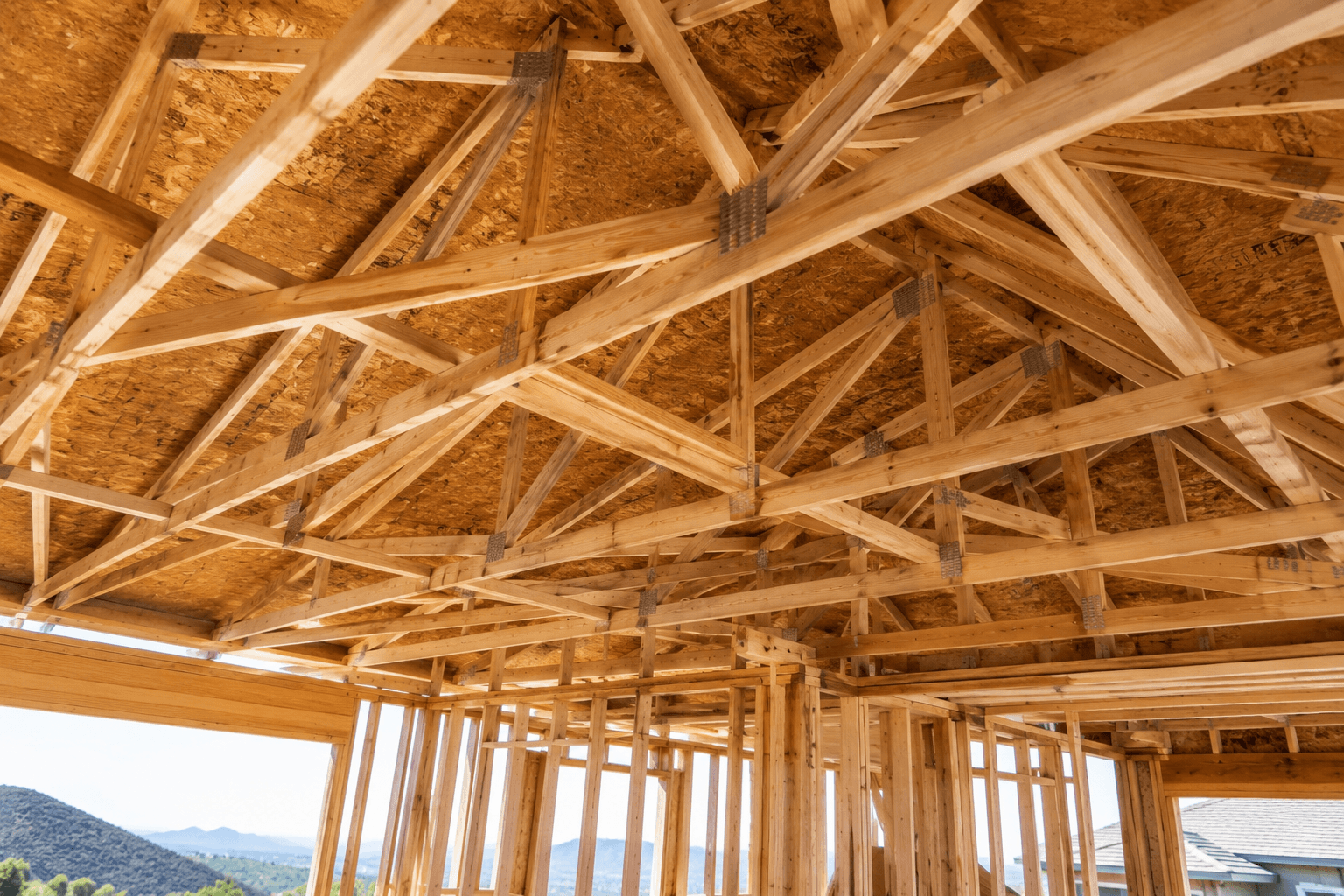
Roof trusses Arizona are engineered structural frameworks that support the weight of the roof and transfer those loads safely to the exterior walls of the home. Unlike traditional roof framing that relies on individual rafters, roof trusses are manufactured using multiple interconnected wood members that work together as a complete structural system.
Each roof truss is carefully designed to provide maximum strength while using materials efficiently. This engineering allows roof trusses to support roofing materials, roof decking, insulation, ventilation systems, and additional structural loads without placing unnecessary stress on the home.
A typical roof truss system supports:
- Roof decking
- Roof underlayment
- Asphalt shingles
- Clay and concrete roof tiles
- Metal roofing systems
- Roof ventilation components
- Solar panel installations
- Temporary maintenance loads
Trusses and rafters both support residential roofing systems, but their construction and load distribution differ. Read our guide to roof rafters Arizona to understand how traditional framing members work and what can weaken them over time.
Because every component depends on the strength of the roof trusses, protecting this hidden framework is essential for maintaining a safe and durable roofing system.
Why Roof Trusses Matter
Every roofing component depends on the structural support beneath it. Roof trusses Arizona form the backbone of the roof by connecting multiple structural elements into one engineered system.
Without properly installed roof trusses, the roof may struggle to support normal loads over time. Structural movement can eventually affect the roof deck, fascia, soffits, flashing, gutters, and even the interior ceilings.
A properly designed roof truss system helps:
- Support the weight of the entire roofing system
- Maintain structural stability
- Improve resistance to high winds
- Reduce stress on exterior walls
- Create open attic space
- Extend the lifespan of roofing materials
- Improve overall roof performance
Professional roofing contractors often inspect roof trusses whenever major roofing work is performed because hidden structural issues may not be visible from the roof surface alone.
How Roof Trusses Arizona Support Your Home
Although they remain hidden behind drywall and insulation, roof trusses Arizona perform several important structural functions that help protect your home every day.
Distribute Structural Loads
One of the primary responsibilities of roof trusses is distributing weight evenly across the home’s structural framework.
Roof trusses transfer the combined weight of roofing materials, roof decking, underlayment, insulation, and temporary maintenance loads to the exterior walls rather than allowing pressure to concentrate in one location.
This balanced load distribution helps:
- Reduce structural stress
- Prevent uneven settling
- Maintain roof alignment
- Improve long-term stability
- Support heavy roofing materials
Proper load distribution becomes especially important during Arizona’s monsoon season when roofs experience strong wind uplift and heavy rainfall.
Strengthen the Roofing System
Roof trusses Arizona provide the structural strength needed to support every layer installed above them. Without a stable truss system, roofing materials may shift, sag, or deteriorate prematurely.
Strong roof trusses help support:
- Roof decking
- Roof underlayment
- Flashing systems
- Ridge vents
- Roofing fasteners
- Exterior roofing materials
Proper truss connections help the framing respond to structural movement without transferring unnecessary pressure to nearby walls. MiTek’s official product page shows its TR Series roof truss ties, including product images, installation guidance, material information, and available models.
Because these components work together, maintaining healthy roof trusses contributes to the performance of the entire roofing system.
Support the Roof Deck
The roof deck is fastened directly to the roof trusses, creating a solid surface where roofing materials are installed. Without adequate support from the truss system, the roof deck may flex or develop structural weaknesses over time.
A properly designed roof truss system helps the roof deck:
- Remain level
- Resist movement
- Support roofing materials evenly
- Improve fastener performance
- Extend overall roof durability
The relationship between the roof deck and roof trusses is one of the most important structural connections within the roofing system.
Improve Roof Stability
Roof trusses Arizona are engineered to work as a complete structural unit rather than individual framing members. This design helps improve the overall stability of the roof while reducing movement caused by changing loads and weather conditions.
Improved roof stability provides several long-term benefits:
- Better wind resistance
- Reduced structural shifting
- Increased durability
- Improved roof performance
- Greater protection during severe weather
Roof-to-wall connectors can provide additional resistance against wind uplift and lateral movement. Tamlyn showcases several hurricane ties designed for attaching trusses, rafters, plates, and other structural wood members.
Homes with properly maintained roof trusses are better equipped to withstand Arizona’s changing climate.
Help Create Open Interior Spaces
Modern roof trusses make it possible to build larger interior spaces without relying on numerous load-bearing walls.
Because roof trusses distribute weight efficiently, many homes feature open floor plans with fewer structural obstacles inside the living space.
This engineering provides homeowners with:
- Larger rooms
- More flexible layouts
- Improved architectural design
- Efficient structural support
- Better use of attic space
While homeowners may appreciate the spacious interior, much of that flexibility is made possible by the hidden roof truss system above.
Common Roof Truss Types
Different home designs require different roof truss configurations. Builders select the appropriate truss style based on roof shape, structural requirements, and architectural design.
Fink Trusses
Fink trusses are one of the most common roof truss designs used in residential construction. Their distinctive web pattern provides excellent strength while efficiently supporting standard gable roofs.
Gable Trusses
Gable trusses are installed at each end of a gable roof and provide support for exterior wall framing while helping define the roof’s shape.
Scissor Trusses
Scissor trusses create vaulted or cathedral ceilings by using angled bottom chords that increase interior ceiling height without compromising structural strength.
Hip Trusses
Hip trusses are commonly used on homes with hip roof designs, where all roof sides slope downward toward the exterior walls. These trusses provide additional support while maintaining the complex geometry of the roof.
Manufactured wood trusses rely on metal connector plates to secure adjoining members and help the framework act as one structural unit. Simpson Strong-Tie showcases its plated truss connectors for supporting trusses, beams, and rafters in wood-framing applications.
Choosing the proper roof truss design ensures the roofing system performs safely and efficiently throughout its lifespan.
Common Roof Truss Problems
Although roof trusses are engineered to last for decades, they can still develop problems when exposed to excessive moisture, structural changes, or poor maintenance. Because roof trusses Arizona are hidden above ceilings and inside attics, many homeowners do not realize there is a problem until visible damage begins to appear elsewhere in the home.
Understanding these common issues can help you recognize when it’s time to schedule a professional roof inspection.
Moisture Damage
Roof leaks are one of the leading causes of roof truss deterioration. When water enters through damaged roofing materials or flashing, it can soak into the wooden trusses and gradually weaken their structural strength.
Moisture damage may lead to:
- Wood deterioration
- Mold or mildew growth
- Reduced structural stability
- Weakened fastener connections
- Interior ceiling stains
Water can reach structural trusses long before stains or sagging become visible inside the home. Our roof leak detection Arizona guide explains how homeowners can recognize hidden moisture problems before they spread into attic framing and other structural components.
Even a small roof leak should be repaired promptly to prevent moisture from spreading into the roof truss system.
Cracked or Split Trusses
Wood naturally expands and contracts as temperatures change. Arizona’s intense heat combined with seasonal weather changes may cause some truss members to develop cracks over time.
Minor surface cracks are often normal, but large splits or damaged connector plates should always be inspected by a roofing professional.
Termite or Pest Damage
Wooden roof trusses may become vulnerable to termites or other wood-destroying insects if moisture problems are left unresolved.
Common warning signs include:
- Small holes in wood
- Hollow-sounding lumber
- Sawdust-like material
- Insect activity inside the attic
Routine inspections help identify pest problems before they compromise the roof structure.
Improper Structural Modifications
Some homeowners modify attic spaces without realizing the structural role roof trusses perform.
Cutting or removing sections of a roof truss to create additional storage or living space can significantly weaken the entire roofing system.
Roof trusses should never be altered without approval from a structural engineer or qualified roofing professional.
Signs of Roof Truss Damage
Because roof trusses remain hidden behind ceilings and insulation, structural issues often appear elsewhere before the damage is discovered.
Watch for these warning signs:
- Sagging rooflines
- Cracked interior drywall
- Doors or windows that no longer close properly
- Roof leaks inside the attic
- Bowed ceiling surfaces
- Visible mold on attic framing
- Separated roof decking
- Unusual creaking sounds during strong winds
If you notice any of these issues, scheduling a professional roof inspection can help determine whether the roof trusses have been affected.
Protecting Roof Trusses Arizona
Preventative maintenance helps preserve the strength of roof trusses Arizona while reducing the likelihood of expensive structural repairs.
Homeowners can help protect their roof truss system by:
- Scheduling annual roof inspections.
- Repairing roof leaks immediately.
- Maintaining proper attic ventilation.
- Keeping gutters clean to prevent water intrusion.
- Inspecting the attic after monsoon storms.
- Controlling moisture levels inside the attic.
- Avoiding unauthorized structural modifications.
Keeping water away from the framing begins with maintaining the protective layers installed above it. Learn how roof underlayment Arizona helps prevent moisture from reaching the roof deck, rafters, trusses, and attic structure.
Routine maintenance not only protects the roof trusses but also helps preserve the roof deck, underlayment, fascia, soffits, and other connected roofing components.
Roof Trusses Arizona Repair vs. Replacement
When damage is discovered, the appropriate solution depends on its severity and the condition of the surrounding roofing structure.
Roof truss repairs may be appropriate when:
- Damage is limited to one section.
- Moisture has not caused widespread deterioration.
- Structural integrity remains intact.
- Reinforcement can safely restore strength.
Replacement may be recommended when:
- Multiple trusses have been compromised.
- Extensive rot has weakened the wood.
- Severe storm damage has affected the framing.
- Improper modifications have reduced structural stability.
- Engineering evaluations determine repairs are no longer sufficient.
A professional roofing contractor can inspect the roof truss system and recommend the safest long-term solution.
Roof Trusses Arizona FAQs
What is the difference between roof trusses and roof rafters?
Roof trusses are engineered structural frameworks manufactured from multiple connected members, while roof rafters are individual framing boards that support the roof. Both provide structural support, but trusses are designed to distribute loads more efficiently.
How long do roof trusses last?
When properly installed and protected from moisture, roof trusses can last for the lifetime of the home. Regular roof inspections help identify problems before structural damage develops.
Can damaged roof trusses be repaired?
Yes. Minor damage can often be reinforced or repaired. More severe structural damage may require partial replacement or engineered repairs depending on the condition of the truss system.
Do roof trusses support solar panels?
Yes. Many roof truss systems are designed to support additional loads, including properly installed solar panels. A roofing professional should evaluate the structure before installation.
How often should roof trusses be inspected?
Roof trusses should be inspected during annual roof inspections and after severe weather events, especially if homeowners notice roof leaks, sagging, or other structural concerns.
Conclusion
Roof trusses Arizona form the structural framework that supports your entire roofing system. From carrying the weight of the roof deck and roofing materials to improving stability during Arizona’s extreme weather, roof trusses play a critical role in protecting your home.
Although they remain hidden from view, roof trusses deserve the same attention as other roofing components. Routine inspections, proper attic ventilation, prompt leak repairs, and regular maintenance all help preserve their structural strength while extending the lifespan of your roofing system.
If you’ve noticed roof leaks, sagging rooflines, cracked ceilings, or other signs of structural movement, contact Tier 1 Roofing today. Our experienced team provides professional roof inspections, structural evaluations, and dependable roofing solutions designed to keep Arizona homes safe, secure, and built to last.