Roofing
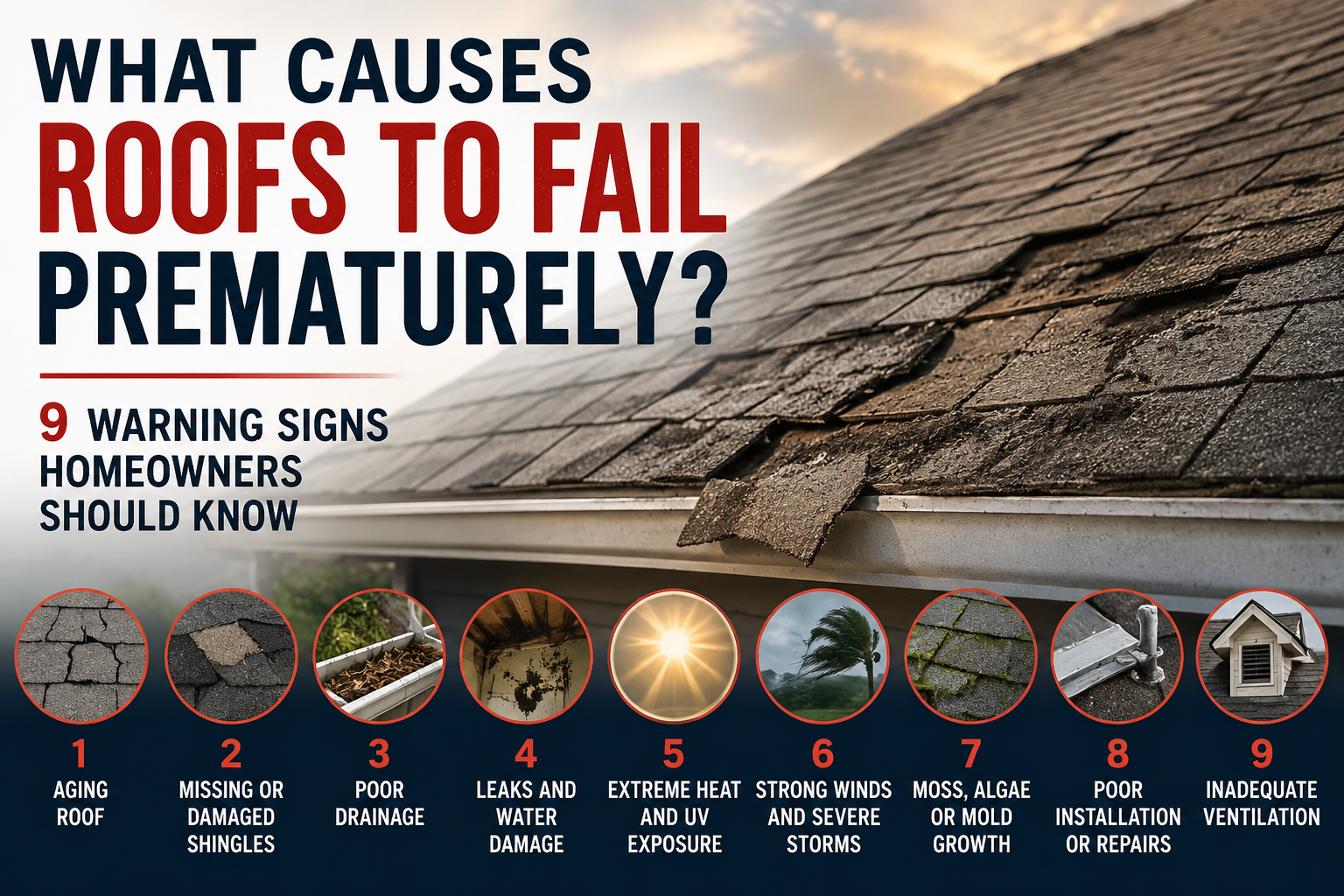
What Causes Roofs to Fail Prematurely? Common Reasons Homeowners Should Know
A properly installed and maintained roof is designed to provide decades of protection. However, many homeowners are surprised to discover that roofing systems sometimes fail much earlier than expected. Premature roof failure can result in expensive repairs, water damage, reduced energy efficiency, and even structural issues.
A properly installed and maintained roof is designed to provide decades of protection. However, many homeowners are surprised to discover that roofing systems sometimes fail much earlier than expected. Premature roof failure can result in expensive repairs, water damage, reduced energy efficiency, and even structural issues.
Understanding what causes roofs to fail prematurely can help homeowners identify signs of roof failure early and take proactive steps to maximize the lifespan of their roofing systems. Knowing these roof damage warning signs can help prevent costly repairs and extend the life of your home.
Understanding what causes roofs to fail prematurely can help homeowners identify warning signs early and take proactive steps to maximize the lifespan of their roofing systems.
In this guide, we’ll discuss the most common causes of premature roof failure, warning signs to watch for, and how regular maintenance can help protect your investment.
Factors That Affect Roof Lifespan
Several factors influence how long a roof lasts. Climate, roofing material, installation quality, maintenance practices, and exposure to severe weather all play important roles. Understanding these factors can help homeowners maximize roofing system longevity and reduce the risk of premature roof failure.
Why Professional Roof Inspections Matter
Professional roof inspections help identify hidden damage before it becomes a costly problem. Experienced roofing contractors can detect leaks, flashing issues, ventilation problems, and structural concerns that may not be visible from the ground. Regular inspections are one of the most effective ways to extend roof lifespan and improve long-term performance.
Importance of Choosing Quality Roofing Materials
Selecting durable roofing materials can significantly affect roof performance and longevity. High-quality materials are better able to withstand heat, moisture, wind, and storm damage, reducing the likelihood of premature deterioration.
Why Do Roofs Fail Prematurely?
Understanding what causes roofs to fail prematurely allows homeowners to take proactive steps to prevent costly damage and extend the lifespan of their roofing systems.
These common roofing problems often develop gradually and may go unnoticed until serious damage occurs.
Most roofing systems are designed to last between 15 and 70 years depending on the material. However, several factors can significantly shorten their lifespan.
Common causes include:
- Poor installation
- Inadequate ventilation
- Storm damage
- Extreme heat and UV exposure
- Lack of maintenance
- Water intrusion
- Aging materials
- Flashing failures
- Improper repairs
Identifying these problems early can help homeowners avoid costly roof replacement.
Common Roofing Problems That Lead to Premature Roof Failure
1. Poor Roof Installation
Proper installation and quality materials are essential for achieving long-term roofing system performance.
One of the leading causes of premature roof failure is poor workmanship.
Improper installation can lead to:
- Leaks
- Loose shingles
- Flashing problems
- Poor drainage
- Reduced wind resistance
- Structural damage
Even high-quality roofing materials can fail prematurely when installed incorrectly.
Signs of Poor Installation
Watch for:
- Uneven shingles
- Exposed nails
- Loose flashing
- Sagging areas
- Repeated leaks
- Missing materials
Hiring an experienced roofing contractor helps ensure proper installation and long-term performance.
2. Extreme Heat and UV Exposure
Arizona homeowners face unique roofing challenges because of prolonged exposure to extreme temperatures and ultraviolet radiation.
Constant heat can cause:
- Cracked shingles
- Tile deterioration
- Dry rot
- Brittle sealants
- Thermal expansion damage
Over time, intense sunlight weakens roofing materials and accelerates aging.
Environmental factors such as excessive heat, heavy rainfall, and strong winds can contribute to roofing material deterioration over time.
3. Inadequate Attic Ventilation
Poor attic ventilation can trap heat and moisture inside the home.
This may lead to:
- Premature shingle deterioration
- Mold growth
- Increased energy costs
- Wood rot
- Moisture damage
Proper ventilation helps regulate temperature and improve roof performance.
Benefits of Proper Roof Ventilation
- Longer roof lifespan
- Better energy efficiency
- Lower cooling costs
- Reduced moisture buildup
- Improved attic conditions
4. Storm Damage
Strong winds, hail, heavy rain, and monsoon storms can weaken roofing systems.
Common storm-related issues include:
- Missing shingles
- Broken roof tiles
- Flashing damage
- Roof punctures
- Water intrusion
Even minor storm damage should be addressed promptly to prevent larger problems.
5. Lack of Roof Maintenance
Neglected roofs often experience hidden issues that shorten the overall roof lifespan and increase the likelihood of expensive repairs.
Neglected roofs often experience:
- Debris accumulation
- Clogged gutters
- Damaged flashing
- Hidden leaks
- Water damage
Routine inspections help identify problems before they become major repairs.
6. Flashing Failures
Flashing protects vulnerable areas around:
- Chimneys
- Skylights
- Roof vents
- Valleys
- Pipe penetrations
Damaged flashing allows water to enter the roofing system and often causes leaks.
7. Water Damage and Moisture Intrusion
Water intrusion is one of the most destructive causes of premature roof failure and is among the most common reasons homeowners seek roof repair and replacement services.
Moisture can lead to:
- Mold growth
- Wood rot
- Ceiling stains
- Insulation damage
- Structural deterioration
Homeowners should never ignore signs of water intrusion, as even minor leaks can lead to extensive moisture damage and mold growth.
8. Improper Roof Repairs
Temporary or low-quality repairs may only mask underlying issues.
Poor repairs can result in:
- Recurring leaks
- Material incompatibility
- Structural problems
- Additional water damage
Professional repairs help ensure long-term protection.
9. Aging Roofing Materials
All roofing systems eventually wear out.
Common age-related problems include:
- Curling shingles
- Cracked tiles
- Deteriorated underlayment
- Sealant failure
- Granule loss
Regular inspections help determine whether repairs or replacement are needed.
Signs of Roof Failure Every Homeowner Should Know
Recognizing these roof damage warning signs early can help homeowners avoid extensive structural damage and prolong the life of their roofing system.
Warning Signs Your Roof May Be Failing
Homeowners should watch for:
Water Stains
Brown stains on ceilings or walls often indicate leaks.
Missing Shingles or Tiles
Missing materials expose the roof to moisture and UV damage.
Sagging Roof Areas
Sagging may indicate structural concerns requiring immediate attention.
Mold Growth
Excess moisture creates conditions favorable for mold and mildew.
Increased Energy Bills
A failing roof can reduce insulation performance and increase cooling costs.
Poor insulation and ventilation can reduce energy efficiency, making regular roof inspections an important part of responsible home maintenance.
How Different Roofing Materials Are Affected
Asphalt Shingles
Common issues include:
- Curling
- Cracking
- Granule loss
Typical Lifespan
15–30 years
Tile Roofing
Tile roofs are highly durable but may experience:
- Broken tiles
- Underlayment deterioration
- Flashing failures
Typical Lifespan
40–75 years
Metal Roofing
Metal roofing systems may develop:
- Fastener issues
- Flashing problems
- Corrosion
Typical Lifespan
40–70 years
Flat Roofing Systems
Flat roofs commonly experience:
- Ponding water
- Membrane damage
- Drainage issues
Typical Lifespan
15–30 years
Roof Material Lifespan Comparison
| Roofing Material | Average Lifespan |
|---|---|
| Asphalt Shingles | 15–30 Years |
| Tile Roofing | 40–75 Years |
| Metal Roofing | 40–70 Years |
| Flat Roofing Membranes | 15–30 Years |
How to Prevent Premature Roof Failure
Maintaining the health of your roofing system requires a combination of routine inspections, preventive maintenance, and prompt repairs when problems arise.
Preventive maintenance remains one of the most effective ways to reduce the risk of premature roof failure and unexpected structural damage.
Taking a proactive approach to roof care helps improve energy efficiency and protect the overall value of the property.
Regular roof maintenance provides homeowners with peace of mind and helps ensure year-round protection against the elements.
How to Prevent Premature Roof Failure
Preventive maintenance plays a major role in extending roof life.
Schedule Annual Roof Inspections
Roofing professionals recommend regular inspections to preserve roof integrity and maximize the lifespan of roofing materials.
Regular inspections help identify:
- Leaks
- Flashing problems
- Damaged materials
- Drainage concerns
Clean Gutters and Drainage Systems
Proper drainage helps prevent water accumulation and roof damage.
Address Repairs Promptly
Timely roof repairs can prevent minor roofing issues from developing into costly replacement projects.
Minor issues are easier and less expensive to repair before they worsen.
Improve Attic Ventilation
Good ventilation helps reduce heat buildup and moisture problems.
Prepare for Storm Season
Before severe weather arrives:
- Inspect roofing materials
- Trim tree branches
- Secure loose components
- Clean gutters
Roof Failure vs Roof Replacement
Repairs May Be Appropriate When:
- Damage is localized.
- The roof still has significant lifespan remaining.
- Leaks are isolated.
Replacement May Be Necessary When:
- Damage is widespread.
- Multiple leaks exist.
- Structural issues are present.
- The roof has reached the end of its lifespan.
Professional inspections can help determine the most cost-effective solution.
Benefits of Preventing Premature Roof Failure
Protecting your roof can provide:
- Longer roof lifespan
- Lower repair costs
- Improved energy efficiency
- Better weather protection
- Increased home value
- Reduced risk of leaks
- Greater peace of mind
Importance of Early Detection
Recognizing the early signs of roof deterioration is critical for preventing major structural issues. Routine roof inspections, preventive maintenance, and prompt repairs can help homeowners extend roof lifespan, improve energy efficiency, and avoid expensive roof replacement costs. Staying proactive is one of the best ways to preserve the performance and durability of residential roofing systems.
FAQs About What Causes Roofs to Fail Prematurely
What is the most common cause of premature roof failure?
Poor installation and lack of maintenance are among the leading causes of early roof failure.
Can extreme heat damage roofing materials?
Yes. Prolonged UV exposure and high temperatures can accelerate material deterioration.
How often should roofs be inspected?
Most experts recommend professional inspections at least once or twice per year and after severe storms.
Can poor attic ventilation shorten roof lifespan?
Yes. Trapped heat and moisture can damage shingles, insulation, and roof decking.
Do roof leaks always mean replacement is needed?
Not necessarily. Many leaks can be repaired if addressed early.
Can storm damage cause premature roof failure?
Yes. High winds, debris, and heavy rain can weaken roofing systems and lead to leaks.
What are signs that a roof is failing?
Common warning signs include water stains, missing shingles, sagging areas, mold growth, and rising energy bills.
Can regular maintenance extend roof life?
Yes. Routine maintenance helps identify minor issues before they become expensive repairs.
Why do roofs fail before their expected lifespan?
Roofs can fail prematurely because of poor installation, lack of maintenance, severe weather, inadequate ventilation, moisture buildup, and aging materials.
What are the first signs of roof failure?
Common warning signs include missing shingles, water stains, roof leaks, mold growth, sagging areas, and excessive granules in gutters.
Can regular roof inspections prevent premature roof failure?
Yes. Routine inspections help identify problems early and can extend the life of your roof by preventing minor damage from becoming major repairs.
How often should homeowners inspect their roofs?
Most roofing professionals recommend a roof inspection at least once a year and after severe storms.
In many cases, premature roof failure can be avoided through routine inspections, proper maintenance, and timely repairs. Staying proactive and addressing roofing concerns early can help homeowners preserve roof performance, improve energy efficiency, and reduce the risk of extensive damage. By understanding the factors that contribute to roof deterioration, homeowners can make informed decisions that support long-term roof health and durability.
Timely roof repairs can prevent minor roofing issues from developing into costly replacement projects.
Conclusion
Understanding what causes roofs to fail prematurely and recognizing the signs of roof failure can help homeowners protect their investment. Regular maintenance, timely repairs, and professional roof inspections can prevent minor issues from turning into expensive damage. Addressing these common roofing problems early helps maximize roof lifespan, improve energy efficiency, and reduce the need for major roof repair and replacement projects.
Scheduling regular inspections, addressing repairs promptly, and investing in preventive maintenance are among the best ways to protect your home and extend the life of your roof.